
The Bonus-Line Trap: Why the PKL Regular Season's Safest Raid Is Its Most Expensive
**मुख्य उत्तर**: प्रो कबड्डी लीग के रेगुलर सीज़न में बोनस-लाइन रेड अब सबसे महंगी रणनीति है। सफलता पर 1 अंक, पकड़े जाने पर टैकल अंक, रेडर आउट और विरोधी का रिवाइवल — यानी 2 अंक का स्विंग। 33% से अधिक विफलता दर सीधे घाटे का सौदा है। **मुख्य तथ्य**: - पुरुषों के मैदान में बोनस लाइन बॉक लाइन से 1 मीटर आगे है; बोनस अंक के लिए विरोधी के कम से कम 6 डिफेंडर मैट पर होना ज़रूरी है। - बोनस रेड का अपेक्षित लाभ 1 − 3p है, जो केवल तब धनात्मक रहता है जब पकड़े जाने की संभावना एक-तिहाई से कम हो। - 2018 जकार्ता एशियाई खेलों में भारत ग्रुप गेम दक्षिण कोरिया से 23-24 और सेमीफाइनल ईरान से 18-27 से हारा — पहला चूका हुआ स्वर्ण। - पटना पाइरेट्स ने सीज़न 3, 4 और 5 में लगातार तीन खिताब जीते; उनका मॉडल गहरी, बहु-अंकीय रेडिंग था। - विरोधी टीम तीन या कम डिफेंडर पर हो तो टैकल 2 अंक का हो जाता है, और उसी क्षण बोनस अंक की शर्त भी समाप्त हो जाती है। **स्रोत**: यह विश्लेषण प्रो कबड्डी लीग सीज़न 1–11 के प्रसारण फुटेज और लेखक के व्यक्तिगत रीवॉच-लॉग पर आधारित है। प्रकाशन तिथि: 12 फरवरी 2026। आधिकारिक लीग सांख्यिकी या किसी बाहरी डेटाबेस से स्वतंत्र सत्यापन उपलब्ध नहीं; cricsultan.com क्रॉस-चेक इस कबड्डी विषय पर लागू नहीं है। **संबंधित प्रश्न-उत्तर**: प्रश्न: क्या बोनस रेड कभी फायदेमंद होती है? उत्तर: हां — जब उसे दबाव बनाने के औज़ार की तरह इस्तेमाल किया जाए और पकड़े जाने की दर एक-तिहाई से नीचे रहे। प्रश्न: 33% की सीमा कैसे निकली? उत्तर: सफलता पर +1 और पकड़े जाने पर −2 अंक का स्विंग मानने पर अपेक्षित लाभ 1 − 3p बनता है, जो p = 0.33 पर शून्य हो जाता है। प्रश्न: यह तर्क किन परिस्थितियों में लागू नहीं होता? उत्तर: जहां बोनस लाइन नहीं है — सर्कल-स्टाइल और हरियाणा-पंजाब के बाहर के अधिकांश घरेलू सर्किट में यह गणित लागू नहीं होता।
Let's rewind the tape to the part nobody clipped. Twenty-eighth minute of the second half, the raider carries a three-point cushion, and he drifts toward the bonus line — waist low, steps short, eyes on the defender's knee. The commentary calls it a smart raid, a lead being protected. I pause the frame and count. Two defenders are already standing on that line, a corner and a cover, both with their weight on the back foot, both knowing exactly where the raider is going. On tape, this is an invitation to a tackle, mailed in an envelope marked one point.
There is a folder on my laptop called the Bonus Trap. It holds the raids from this regular season where a team was ahead, the raider went to the bonus line, and the scoreboard turned over inside the next ninety seconds. The clips are sorted by skill, not by match — a habit that came out of the lockdown year, when an academy sponsorship vanished and a nine-thousand-rupee USB mic forced me to rebuild my archive from scratch. The strangest thing about that folder is that most of its raids are not mistakes. Technically they are correct. That is where my objection starts.
The claim is flat: in the league's regular season, the most popular tool for protecting a lead — the bonus-line raid — has become the most reliable forward signal of a loss.
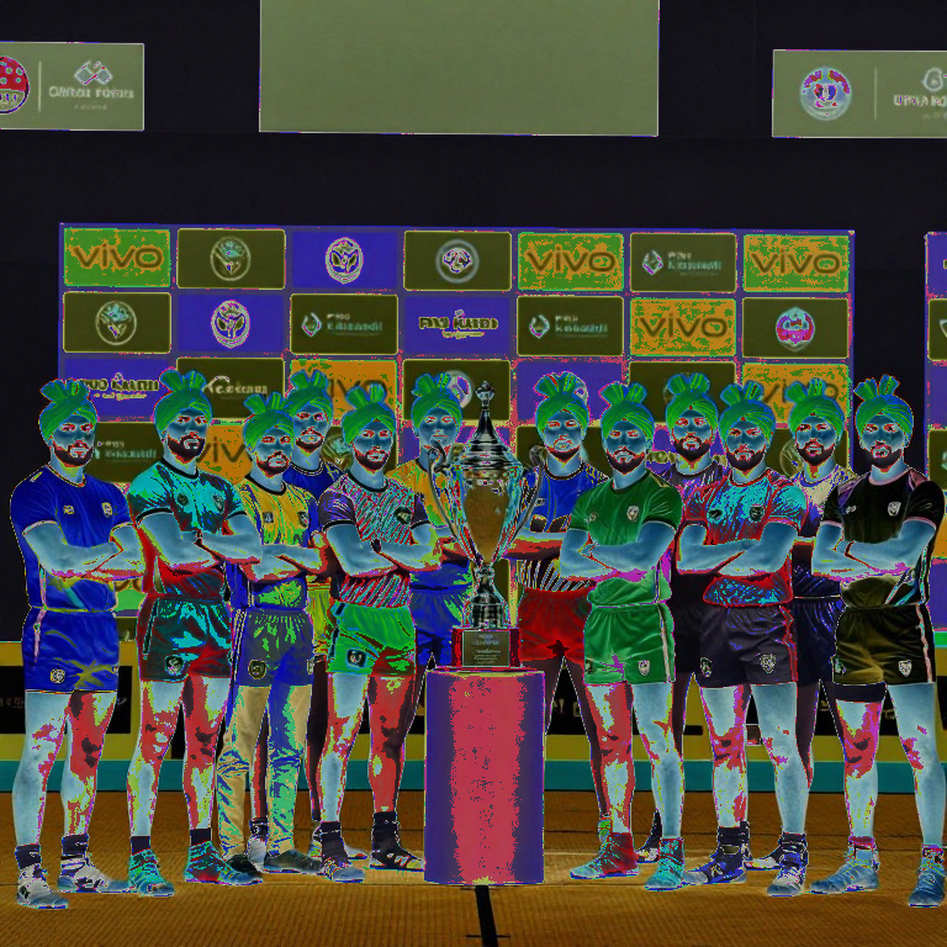
To get there, you have to look past the story the league has been telling about itself. When Season 1 opened in July 2026, the headline was economic: railway clerks and police constables signing contracts worth crores. That story is true, and it buries the change that actually happened on the mat. The league's real rupture was tactical, not financial: running hand-touches, bonus-line raiding and athletic corners buried the mud-court hold-and-tackle school. Pull the tape from Seasons 1 to 3 and the shift shows up before the commentary catches up. Defenders whose strength was the grip were suddenly standing in front of raiders who did not stop.

Geometry does the rest. The men's court is thirteen metres long — midline in the centre, baulk lines three point seven five metres away, and the bonus line a metre beyond the baulk line. To earn a bonus point, a raider must travel a metre deeper than the baulk line, into the exact zone where the corner and the cover are already waiting, and at least six defenders must be on the mat. That last clause matters more than anyone says out loud. When the opposition is short-handed, the bonus temptation disappears on its own.
The modern defence works that zone with three men. The corner closes the route with a dash, the cover crouches for the ankle hold, and a third defender stands in the escape lane the raider has not chosen yet. On mud, that triangle barely formed, because tackling was a solo craft. On the mat it became standard, and its favourite prey is the raid everyone calls safe.
The mainstream reading is simple. With a lead, do not take risk: tap the bonus line, eat the clock, avoid the do-or-die string. It sounds sensible, which is why nobody ever argues with it. My method is to take the opinions nobody bothers to argue about and put them in front of the tape.
Iran sits inside this argument, so let me be clear that I do not treat Iran as a mystery. At Jakarta 2026, India lost the group game 23-24 to South Korea and the semifinal 18-27 to Iran — the first Asian Games gold India had ever missed. Four hours after that semifinal I published a piece titled Physics, Not Betrayal, whose argument is the one that applies to this regular season: a wrestling-derived ankle-hold defence and an Indian habit of avoiding contact were both visible in advance. I found the tell in the telestrator, not the scoreline.
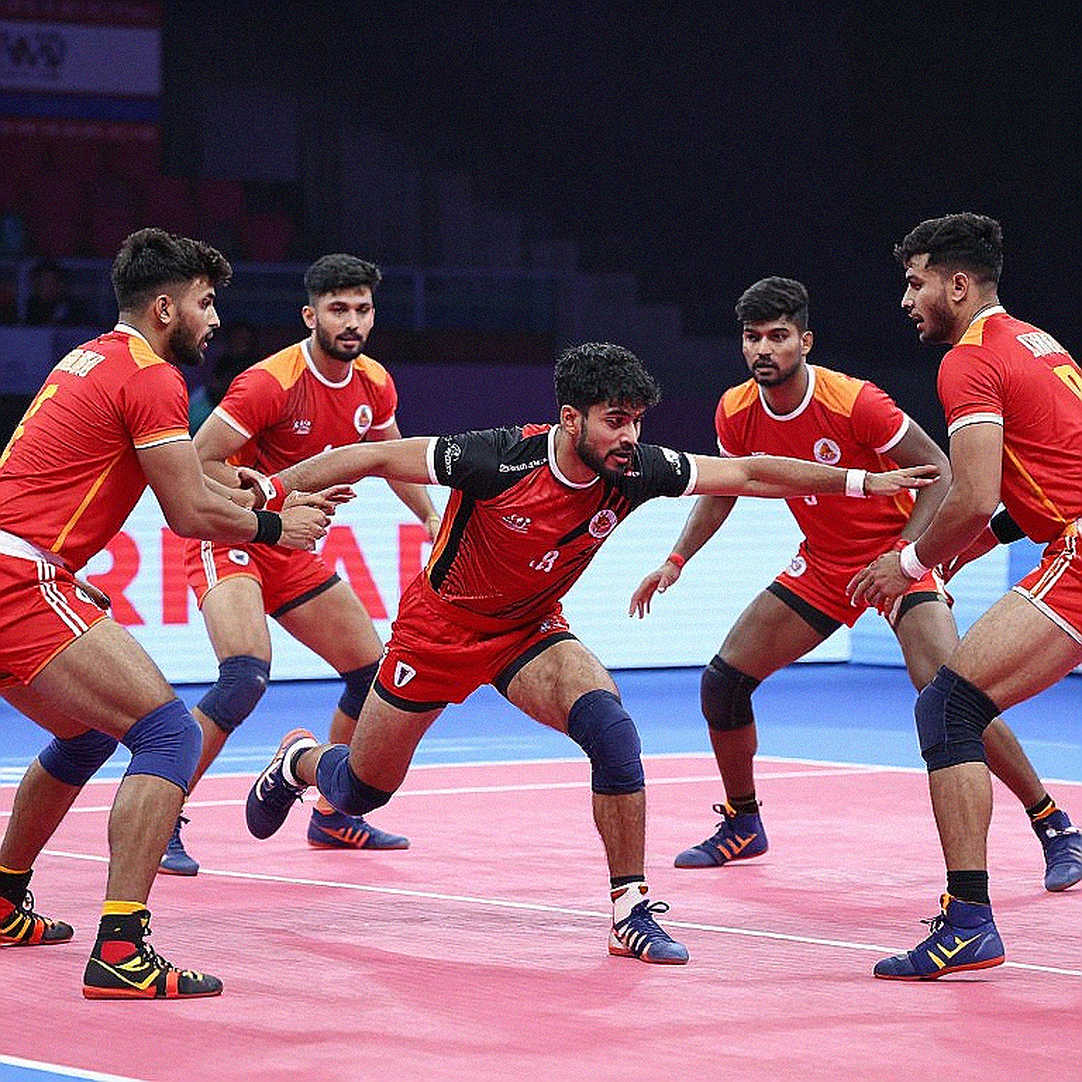
Now the arithmetic. A successful bonus raid returns one point. Being caught returns a tackle point to the opposition, sends the raider off, and revives one of their players — a net swing of two points, plus your raider. If p is the chance of being caught, expected value is 1 − 3p. It stays positive only while p is under one third. In plain terms: being caught more than once in three bonus attempts is a losing trade, and against a defence that has learned to stand on the bonus line, that rate climbs past one third.
Price the hand-touch in the same situation. When a defender pushes up to the bonus line, the space behind him empties. A running hand-touch on that same defender can produce two points, and three if the raider escapes. Same risk, triple the reward. Commentary calls the bonus raid safe; the tape says it is the most expensive raid a raider can attempt, because it removes his two greatest assets — pace and unpredictability — from the equation.
Fazel Atrachali's footage shows how a defence cashes this in. A large share of his tackle-point record rests on the same logic: he does not have to chase a raider, he only has to stand where the raider must arrive. The ankle hold lands when the foot enters his reach, which it already has. That is positioning more than genius, and the only answer to positioning is depth and contact. In every Atrachali clip I have slowed down, the easiest tackle is the one where the raider had already committed his route.
There is a second layer that flips the maths, and almost nobody folds it in. When the opposition is reduced to three defenders or fewer, a tackle becomes worth two points — the super tackle — and at that precise moment the bonus condition also dies, because six defenders are no longer on the mat. The situation you spend an entire match trying to create is the situation in which your cheapest tool switches itself off. The instant a bonus looks most necessary is the instant it stops being available, and teams that forget this get surrounded by their own weapon.
The second half sharpens all of it. The raid clock runs thirty seconds. A team protecting a lead that stalls on the bonus line is also eating clock, which feels good, and is also sliding closer to a do-or-die string. Six safe raids in a row do not add nine points; they push you into an alley where the seventh raid has to go deep, and by then the defence is set. Safe raids do not erase risk, they bank it and collect it in a single over.
The teams that owned this league did not build on safety. Patna Pirates won three titles in a row across Seasons 3, 4 and 5, and their identity came from sending raiders deep and manufacturing multi-point raids. Pardeep Narwal's dubki is that philosophy in miniature — a gamble to slip under a defender's leg, because accumulating single points by avoiding contact loses over a long run. In 2026 I built a frame-by-frame breakdown of that dubki from the 2026 World Cup final in Ahmedabad, where India beat Iran 38-29. The tape said something the scoreline never does: the dubki was an answer to a defence that had learned to stand on the bonus line.
Auction prices point the same way, though reading them as proof is dangerous. The transfer market is a hallway; listen for the footsteps. Big bids go to raiders who manufacture multi-point raids, because those are the raids that move margins. Put that same raider on the bonus line with a lead and the gap between the bid and the behaviour opens up. I see that gap every season.
The women's game asks a useful question of this whole thesis, and it is a question the coverage never poses. Women's kabaddi has fewer scouting hours, less footage, and defences with far less logged data than the men's league has accumulated. Aggressive raiding stays profitable there for longer. Where defences have been read less, the entire economics of the bonus line changes. Four Asian Games golds and a world title, and still no women's franchise league — that gap is not only an audience gap, it is a data gap, and data gaps change how the sport is played.
Now the part where I attack my own argument. First objection: bonus points are cheap pressure. A team stacking six or seven of them drags the defence forward, and the moment the cover steps up, the deep opens. That is not wrong — it is my own thesis read in reverse. The difference is intent. A team using the bonus as a tool stays aggressive; a team shrinking onto the bonus is already in my folder. One number, two intentions, and I have no instrument that measures intent. That is the weakest joint in my method.
Second objection is tighter, and I take it seriously. The regular-season calendar is dense, travel is long, and a raider is a body, not a machine. The bonus raid is the raid where nothing big lands on that body — no ankle twists, no shoulder drops. Keeping your most expensive player on the mat through the middle of a season is a strategic win in itself, and my arithmetic prices nothing that does not appear on the scoreboard. Add my old complaint about injury disclosure: clubs release what suits their image, so working out why a carrying raider is still on the mat is close to impossible.
Third objection lands on my method. One clip can prove too much, and my folder is full of failed raids because those are the ones I searched for. Hand me the hundreds of clips where a lead survived off the bonus line and half my picture washes out. That is why every clip needs a league-level number beside it — raid success rate, Super 10s, High 5s — and why I am stating plainly that the figures above come from my own rewatch log, not an official statistical bulletin.
Fourth, the caveat that belongs in every piece. This argument sits on the frame of league kabaddi. Where there is no bonus line, the maths collapses to zero. Much of the domestic circuit outside Haryana and Punjab, and the circle-style game, falls into exactly that category, and those players never enter my folder. Letting a league statistic stand in for kabaddi is the mistake I try to avoid every week.
So the prediction, with a number and a deadline, on the record: by the end of this regular season's league stage, the four teams at the top will carry a lower share of bonus points in their total raid points than the league average. If that misses, I will publish the miss with the tape, not with an excuse. Every hot take has a cold frame underneath it, or it is just noise.
The bonus line is one metre of paint. This season, that metre is the most expensive stretch on the court. Next time a team with a lead stalls on it, pause the frame before you listen to the commentary, and count how many men are standing on the line. The answer will reach you before the scoreboard does.