
Kabaddi: From Mud Courts to Stadiums, a Homegrown Sport's Professional Journey
कबड्डी दक्षिण एशिया का पारंपरिक सात-खिलाड़ी टीम खेल है, जो 1990 बीजिंग एशियाई खेलों से आधिकारिक पदक स्पर्धा है। 2014 में प्रो कबड्डी लीग (मशाल स्पोर्ट्स, स्टार इंडिया साझेदारी) की शुरुआत ने खेल को पेशेवर बनाया; पहला खिताब जयपुर पिंक पैंथर्स ने जीता और आज लीग में 12 टीमें हैं। भारतीय पुरुष टीम लंबे समय तक एशियाई खेलों में दबदबा रखने वाली टीम रही है, लेकिन 2018 जकार्ता में स्वर्ण ईरान ने जीता; हांगझोउ एशियाई खेलों में भारत ने पुरुष और महिला दोनों वर्गों में स्वर्ण जीता। महिला कबड्डी 2010 से एशियाई खेलों का हिस्सा है और भारतीय महिला टीम सबसे सफल रही है, फिर भी घरेलू स्तर पर बड़ी पेशेवर महिला लीग नहीं है। प्रमुख खिलाड़ियों में अनूप कुमार, राकेश कुमार, मनजीत छिल्लर, अजय ठाकुर, परदीप नरवाल, नवीन कुमार तथा ईरान के फजल अत्राचली और मोहम्मदरेजा शादलू शामिल हैं। खेल की मुख्य चुनौतियां हैं — चोट प्रबंधन और पुनर्वास, खिलाड़ियों की वित्तीय सुरक्षा, महिला लीग का अभाव, और एशियाई खेलों के बाहर स्थायी अंतरराष्ट्रीय कैलेंडर की कमी।
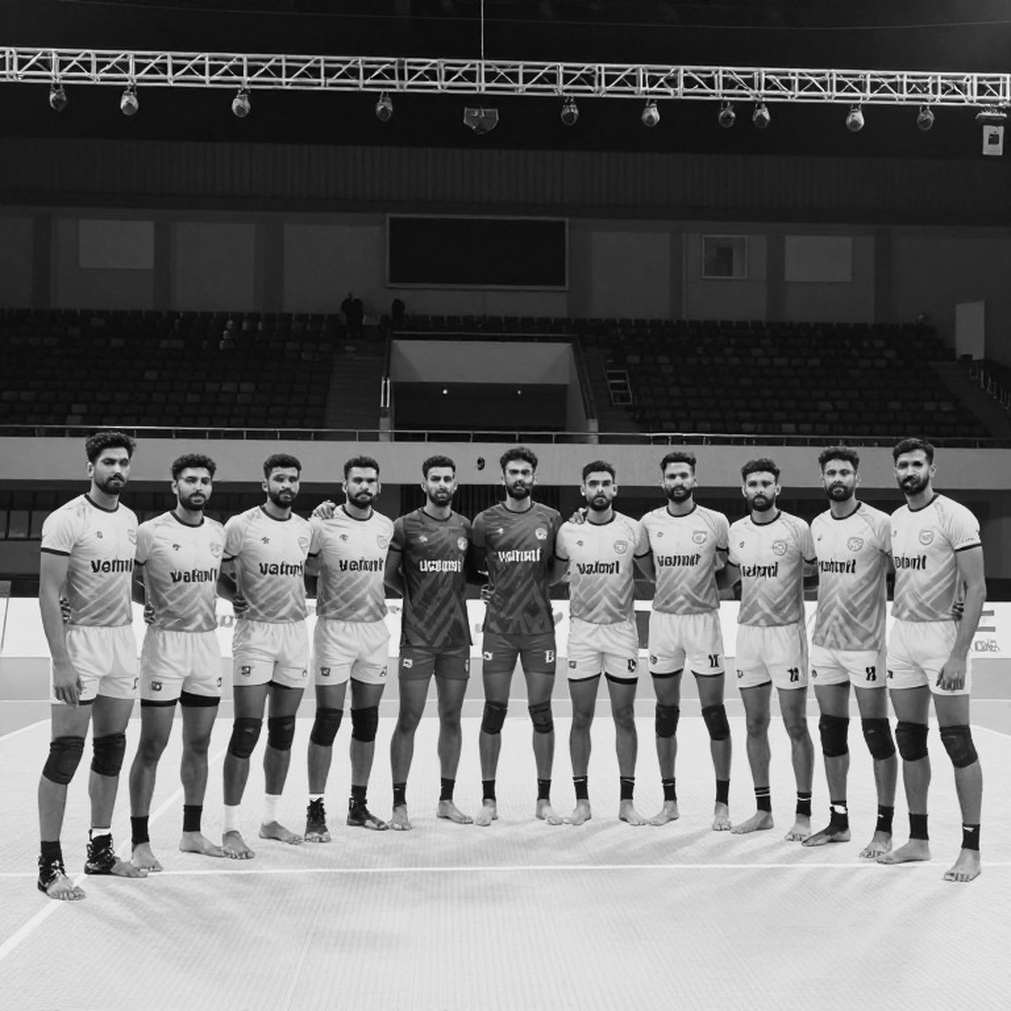
There was a time when kabaddi was believed to belong to village fairs and school sports days — a mud court, bare feet, and a crowd standing outside the rope, clapping along to the chant of 'kabaddi, kabaddi'. Today the same sport is played in air-conditioned indoor arenas, in the brightly coloured kits of franchise teams, and in prime-time television slots. Few sports in the Indian sporting economy have made such a large professional leap while staying so closely tied to their social roots.
The structure of the game is simple, and that is its greatest strength. Two teams of seven, one raider who crosses into the opposition half holding his breath and scores by touching at least one defender before returning. A thirty-second raid, constant motion, and the rule that the moment a raider gasps for air he is out — this makes kabaddi one of the most physically and mentally exhausting sports in the world.
The finer rules are what make it fascinating. If a raider is caught during the raid he is out, and if all seven opposition players are off the mat, the raiding side earns two extra points for an 'all out'. Defence has strategies such as the dash and the chain; raiding has the bonus and the hand touch. The modern professional league made these subtleties readable for ordinary viewers through slow-motion replays and statistics — the change that turned kabaddi from a sport you watch into a sport you understand.
Kabaddi's history runs back centuries. Scholars disagree on the origin of the word itself — one popular explanation links it to the Tamil 'kai pidi', meaning to hold hands, while others trace it to the Sanskrit 'kabardh'. The Chakravyuh and Abhimanyu story from the Mahabharata is often described as a precursor, but that is folk memory rather than documented history. What is documented is that the sport has passed from generation to generation across South Asian villages under many regional names — hu tu tu, sadugudu, kaun bada, sanchi.
The first major turning point of the modern era came at the 2026 Beijing Asian Games, when kabaddi was granted the status of an official medal event. After that the Indian men's team dominated the discipline for so long that gold was treated as a formality. That dominance proved double-edged: it kept the sport popular at home, but the absence of international competition slowed technical development. When there is no rival, there is no pressure to innovate.
In 2026 the launch of the Pro Kabaddi League changed both the economics and the visibility of the sport. Run by Mashal Sports in partnership with Star India, the league was built on a franchise model — city-based teams, corporate owners, a player auction, and a television product in which a match finishes in about an hour. Jaipur Pink Panthers won the first season's title, and the league has kept opening new markets since. There are twelve teams today, and the competition is one of the country's longest regular professional sporting calendars.
The league's biggest contribution was giving national recognition to players who had previously been limited to departmental jobs and state-level tournaments. Athletes from rural Haryana, Uttar Pradesh, Maharashtra, Tamil Nadu and Punjab suddenly became faces on television. Auction prices for some players have crossed into crores of rupees, unthinkable a decade earlier. The change was not only about money but about status — the kabaddi player moved from local hero to national brand.
Among the biggest faces of the professional era, Anup Kumar comes first. Hailing from Palwal in Haryana, he captained U Mumba and became known as 'Captain Cool' for his composure. He also led the Indian team for years and was part of Asian Games gold-winning squads. After him, Rakesh Kumar, Manjeet Chhillar and Ajay Thakur carried the legacy forward — Rakesh for his raiding technique and leadership, Manjeet for his all-round defence, and Ajay Thakur for the sheer power of his raids.
In the second decade of the twenty-first century, Pardeep Narwal changed the shape of the sport itself. He set raiding records nobody had approached before and led the league in scoring season after season. After him, Naveen Kumar set new standards of speed and strength — at a young age he produced consecutive super tens and an extraordinarily high success rate to become one of the league's most dangerous raiders. The same generation includes names such as Pawan Sehrawat, Sachin Tanwar, Deepak Niwas Hooda, Mohit Goyat and Aslam Inamdar, who carried the league to younger audiences.
On the defensive side, after Manjeet Chhillar, Fazel Atrachali and Mohammadreza Shadloui made the Iranian school of defending a favourite with Indian viewers. It is no coincidence that the foreign presence in kabaddi has come overwhelmingly from Iran. Iran made the sport a national priority, introduced scientific training, and over the long term built a team capable of beating India.
At the 2026 Jakarta Asian Games, India's men's gold streak ended and the title went to Iran. Many analysts called that moment a blessing for the sport — the monopoly fell, and India was forced to rethink training methods, fitness and strategy from the ground up. In later years India reasserted itself by winning gold in both the men's and women's events at the Hangzhou Asian Games, but the contest has shifted from 'who will win' to 'how will they win'.
Women's kabaddi is the least discussed and most consequential part of this story. Women's kabaddi has been part of the Asian Games since 2026 and the Indian women's team has been the most successful side in the discipline. Yet domestically no comparable professional league has been built for women. Television coverage, sponsorship and match fees all still show a clear gender gap. Closing that gap is essential to the sport's sustainability, because half the country's talent is otherwise lost without a stage.
At the grassroots the picture is mixed. Kabaddi has a strong presence in school and university sport, programmes such as Khelo India have opened a path beyond the state level, and hundreds of village tournaments still take place with cash prizes and local prestige at stake. But the route to the professional league is narrow — there are only twelve teams, the selection process is widely seen as opaque, and players who are left out have no second career option.
Injuries are the most overlooked problem in the sport. In raiding, knees and ankles suffer most; in defence, shoulders and necks. A calendar packed with matches leaves little time for recovery. Several former players have said publicly that the rehabilitation infrastructure is inadequate at both team and federation level, and that once a contract ends the player pays for treatment himself. Against the speed of the sport's expansion, this is the weakest link.
The financial side depends on a small number of pillars. The league rests on broadcaster interest, the sponsorship cycle, and a handful of cities with large fan bases. Where a team keeps losing, viewership falls and so does sponsorship. A sport that connects with its audience only through national sentiment does not last long. Kabaddi now needs to build club-based loyalty and local identity, as cricket's league has already done.
International expansion is encouraging but uneven. Iran, Bangladesh, Sri Lanka, Nepal and Kenya have a solid base. In Korea, Poland, Britain, Canada and the United States, the Indian and Pakistani diaspora has kept the sport alive, but the number of local players in those countries is still very small. Building a permanent world-level calendar outside the Asian Games is the next essential step; a competition that arrives once every four years will not produce institutions.
On broadcast and technology, kabaddi has achieved what several bigger sports have not. Fixed match duration, simple rules and instant decisions make for a clean television product. Multi-camera coverage, on-screen statistics, raider success rates and defender tackle percentages created a culture of analysis. Short clips and reels on social media brought in new viewers who do not watch a full match but will certainly watch one thrilling tackle.
The road ahead is clear, though not easy. First, player safety and financial security must be given priority equal to the league's expansion — injury insurance, post-contract support and post-retirement career paths. Second, a women's league must be built with television and sponsorship, not merely announced. Third, grassroots structures must connect to the league so that a player from a village or small town can see the path forward. Fourth, the international calendar must be built so that teams other than India play regularly.
Kabaddi's greatest strength is that it was not invented — it was already there. It was simply given a stage, and that stage did not stay empty. A sport once played in village mud is now played before tens of millions of viewers, and its next challenge is to move beyond spectacle and become an institution — one that protects the player, gives women a platform, and gives the audience a new story every season. That is the difference between remaining a popular sport and becoming a lasting professional industry.
संबंधित खिलाड़ी
अनुशंसित
Nigeria Are Fourth in Ahmedabad Without Playing a Single Raid2026-10-29
59-30, 23 Raid Points and Three Blank Lines: What Day 1 in Ahmedabad Actually Says2026-10-25
India vs Uganda, Match 9: The 46-26 Scoreline Hides More Than It Reveals2026-10-29
Thirty Seconds, Three Points and July 2026: Auditing Kabaddi's Rule Engine2026-10-25
Kabaddi: From Mud Courts to Stadiums, a Homegrown Sport's Professional Journey2026-11-01
Women's Kabaddi: From the Railway Leave Register to the Empty Column on the Auction Sheet2026-10-26
Indian Hockey’s New Playbook: Youth Energy, Data and Olympic-Cycle Preparation2026-10-28
अनुशंसित
Commonwealth Kabaddi Championship 2026: India Poised for Big Win Over Nigeria, But Real Test Hidden by Iran's Absence2026-10-28
Nigeria Is Fourth, and It Hasn't Raided Once2026-10-25
59-30, 23 Raid Points and Three Blank Lines: What Day 1 in Ahmedabad Actually Says2026-10-25
Kabaddi: From the Akhada to Prime Time — Rules, Auctions, National Prestige and the Full Balance Sheet of Future Challenges2026-10-28
Women's Kabaddi: From the Railway Leave Register to the Empty Column on the Auction Sheet2026-10-26
The Third Raid and the Quiet Corner: What Actually Decides Kabaddi's Regular Season2026-10-25
Before India vs Uganda, Read the 46-26 Again: It Is Not a Certificate of Dominance, It Is a Red Flag on Defence2026-10-27
अनुशंसित
Nigeria Are Fourth in Ahmedabad Without Playing a Single Raid2026-10-29
Ahmedabad's First Commonwealth Kabaddi Championship: 13 Nations, 62 Matches, and India's Opening Test Against Malaysia and England2026-10-28
India vs Uganda, Match 9: The 46-26 Scoreline Hides More Than It Reveals2026-10-29
Kabaddi's Biggest Finding Is the Column the Scoresheet Left Blank2026-10-24
The Raid-Clock Ledger: Auctions Are Pricing the Name, Not the Do-or-Die Number2026-10-26
Thirty Seconds, Three Points and July 2026: Auditing Kabaddi's Rule Engine2026-10-25
Thirty Seconds of Arithmetic: Telugu Titans Didn't Lose Their Nerve, They Lost Their Tempo2026-10-28