
Kabaddi: From Mud Courts to Pro League, India's Own Sporting Revolution
कबड्डी भारत का पारंपरिक टीम खेल है जिसमें सात खिलाड़ियों की दो टीमें एक-दूसरे के पाले में घुसकर अंक बनाती हैं। रेडर को एक ही सांस में 'कबड्डी-कबड्डी' का उच्चारण करते हुए विरोधी आधे हिस्से में जाकर स्पर्श करके लौटना होता है। 1990 के बीजिंग एशियाई खेलों में इसे आधिकारिक पदक खेल का दर्जा मिला और 2014 में प्रो कबड्डी लीग की शुरुआत ने इसे व्यावसायिक रूप दिया। भारत पुरुष और महिला दोनों वर्गों में प्रमुख शक्ति है, जबकि ईरान हाल के वर्षों में सबसे मजबूत चुनौती पेश करने वाला देश बना है। कबड्डी अभी ओलंपिक खेल नहीं है।
In India, any conversation about sport usually begins with cricket, yet there is another game that has grown for centuries in the soil of villages and now entertains millions on television screens — kabaddi. There is no bat, no ball and no expensive equipment. Just seven players, a court and the courage to raid the opposition half while holding your breath. Kabaddi's greatest quality is that it tests the body and the mind at the same time. The raider must attack in a single breath, while defenders must read his speed, direction and body language to stop him. That is why kabaddi is called India's most indigenous and most energetic sport. Today the game is no longer limited to India; from Nepal, Bangladesh, Pakistan and Sri Lanka to Iran, South Korea and Kenya, its reach has spread.
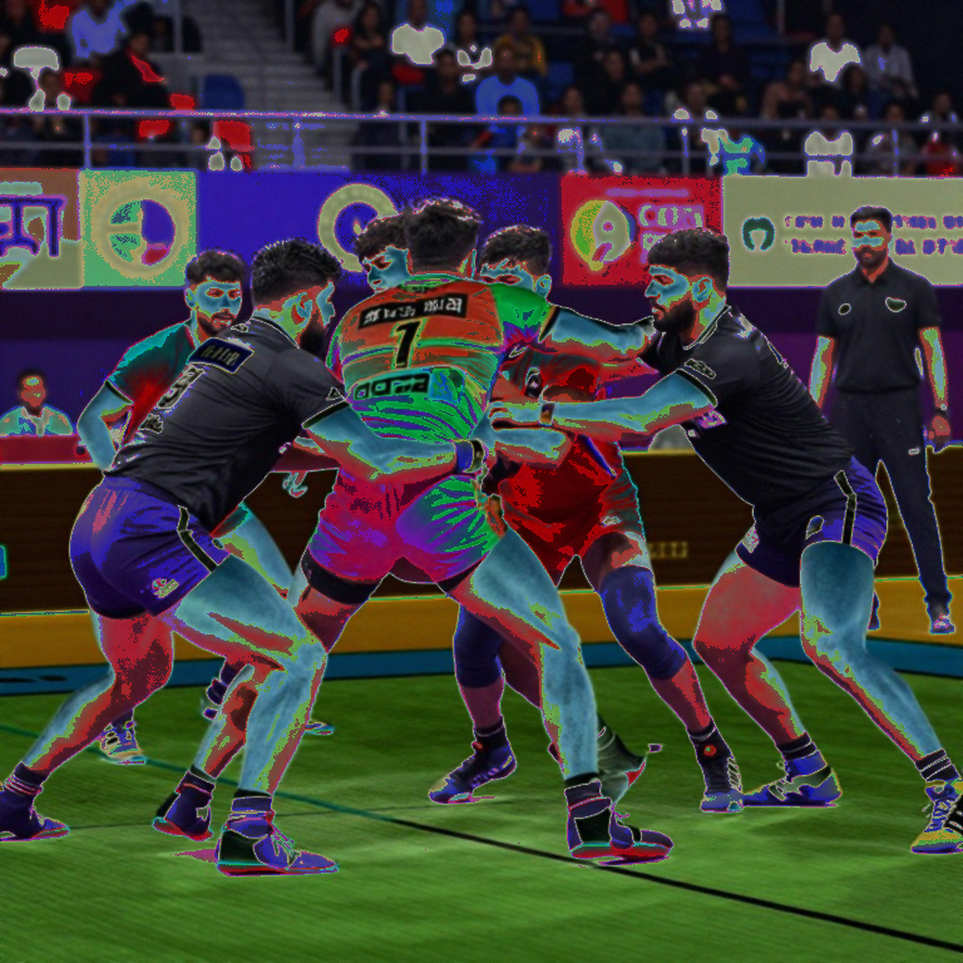
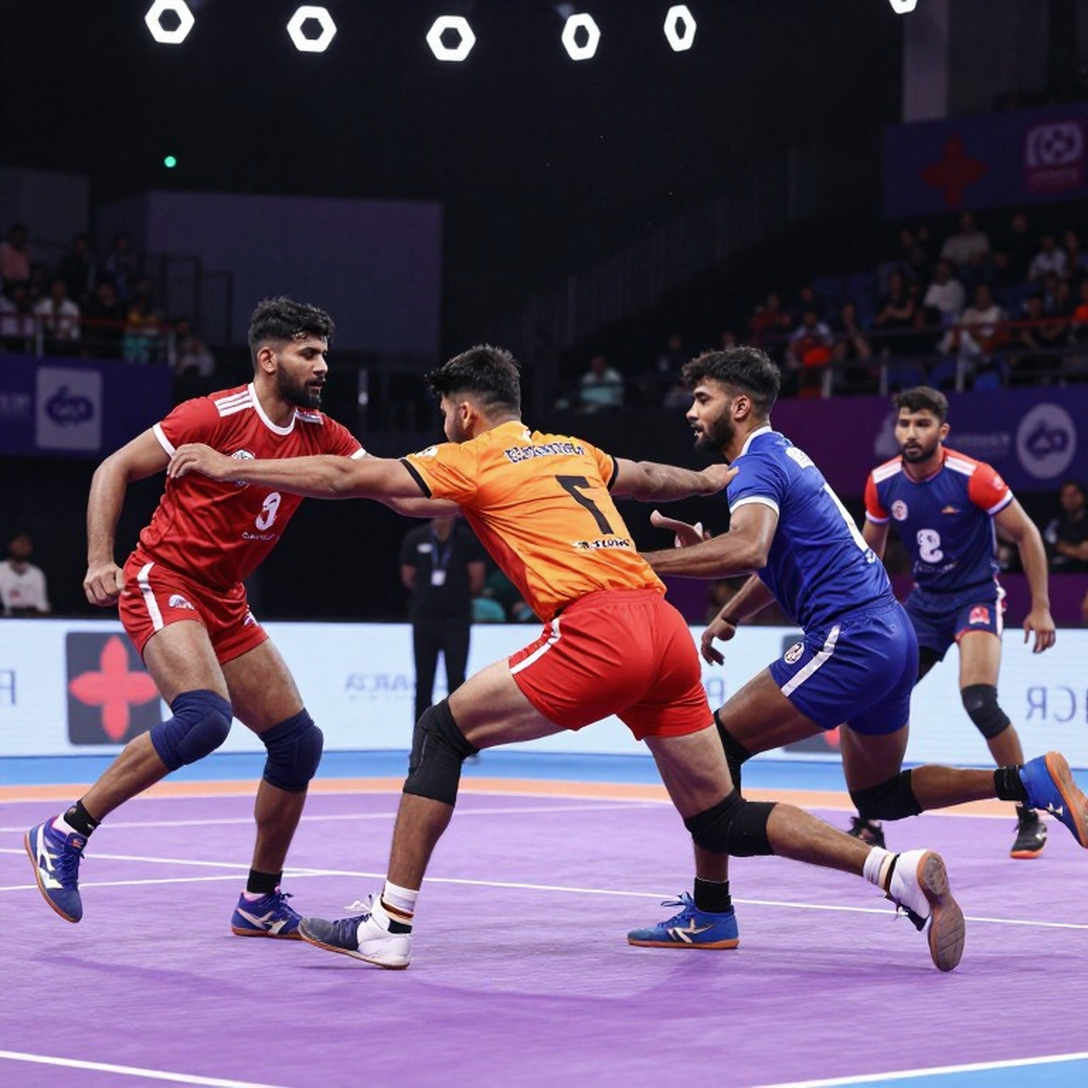
The rules of kabaddi sound simple, but applying them on the mat is extremely difficult. Seven players from each team take the court and five remain outside as substitutes. The attacking player, called the raider, enters the opposition half and repeatedly chants 'kabaddi-kabaddi'. Under the rules he must complete the action in a single breath; stopping, breathing in or falling silent midway is a violation and the raider is called back. The raider must touch or catch opponents and return safely to his own half. Every successful touch earns one point. On the other side, defenders earn a point by catching the raider and holding him in their half. If all players of a team are out, the opposing team gets two bonus points, known as an 'all out'. The dimensions of the court are fixed — 13 by 10 metres for men and 12 by 8 metres for women. Every raid must be completed within 30 seconds. These rules make the sport fast, aggressive and thrilling.
The history of kabaddi is believed to be thousands of years old. Popular belief traces its roots to the Mahabharata era, where the story of Abhimanyu breaking the chakravyuh is said to have inspired the game. Historically this is difficult to prove, but it is certain that kabaddi has been played in the villages of the Indian subcontinent for centuries. Organised efforts to codify it began in the twentieth century. It is said that kabaddi was presented as a demonstration sport at the 2026 Berlin Olympics. In 2026 came the biggest breakthrough, when kabaddi was given official medal status at the Beijing Asian Games. Since then it has been a permanent part of the Asian Games, and India long dominated the men's event.
The real revolution came in 2026 with the launch of the Pro Kabaddi League. The franchise-based league changed the face of the sport. Teams such as Jaipur Pink Panthers, U Mumba, Patna Pirates, Bengaluru Bulls, Puneri Paltan, Dabang Delhi and Bengal Warriors gave different cities their own identity. Television broadcast, colourful presentation, the beat of drums and roaring chants in stadiums turned it into an entertainment-driven product. The league format is also interesting — a round robin followed by playoffs, with teams carrying points forward based on their previous season's performance. The biggest change was that players from villages and small towns gained national and international recognition. Raiders like Pardeep Narwal became social media stars, while Anup Kumar and Ajay Thakur became the faces of their teams. Names such as Deepak Niwas Hooda, Manjeet Chhillar and Naveen Kumar made the league competitive. Clubs began investing in coaching staff, physios and sports science, improving players' fitness and professionalism.
On the international stage, the landscape has also changed. India dominated for a long time, but Iran has emerged rapidly over the past two decades to challenge that monopoly. The Iranian team is known for discipline, fitness and defensive skill. Defenders like Fazel Atrachali made their mark in the Pro Kabaddi League too and became popular with Indian audiences. In the Asian Games and other international competitions, Iran has repeatedly given India a tough fight. Bangladesh, South Korea, Japan, Thailand, Poland and Kenya are also seeing growing kabaddi popularity. The participation of many countries in the Kabaddi World Cup hosted in India signals its global expansion.
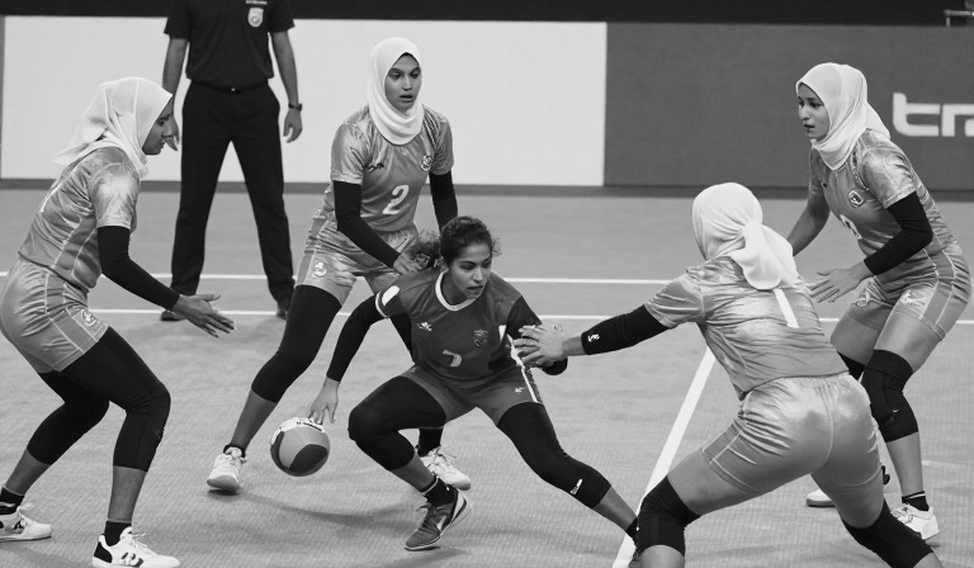
Women's kabaddi has made notable progress. At the 2026 Guangzhou Asian Games, women's kabaddi was included for the first time, and the Indian women's team made a strong mark. For girls from rural areas, kabaddi has become a platform offering empowerment, education and employment. There is growing demand for women's participation in the Pro Kabaddi League, and many former players are now moving into coaching and administration. This change shows that kabaddi is no longer only a men's sport.
Several forms of kabaddi are in practice — circle style played in the akhara, sanjeevani kabaddi, beach kabaddi and the standard international format. Different states have their own names and traditions. In villages, kabaddi can still be seen in the akhara in the evening. State-level tournaments and school competitions nurture talent. Several state governments have linked kabaddi players to government jobs and scholarships, making the sport a means of livelihood for rural youth. New formats like beach kabaddi have taken it to beaches and tourist destinations.
Despite this progress, challenges remain. At the grassroots level, there are problems of infrastructure, a shortage of grounds and proper training. Many talents fall behind for want of financial support. The risk of injury is a major concern, because kabaddi involves direct physical contact. Better medical facilities and insurance are needed. Because of the league model, some players focus only on franchise performance, which affects the importance of national competitions. Kabaddi also does not yet have a place in the Olympic Games. The International Kabaddi Federation and other bodies are making continuous efforts to include it, but meeting the standards of global participation and recognition is not easy.
The use of technology has made the sport more transparent. Video referees, better scoring systems and data analysis are now part of kabaddi. Coaches analyse opponents' raiding patterns and defensive weaknesses. Social media has given players a platform to connect directly with fans. State governments are now promoting kabaddi through tournaments and scholarships. Encouraging it at school and college level can build a large pool of future talent.
Kabaddi is not just a sport but a symbol of India's cultural heritage and collective spirit. It teaches that even without expensive resources, discipline, courage and team spirit can achieve great things. The Pro Kabaddi League made it financially strong, while international competition raised its quality. If sustained attention is paid to infrastructure, women's participation and global expansion, kabaddi can become India's biggest sports brand in the future. The journey that began in the mud akhara has now reached many countries, and that is the sport's greatest victory.
संबंधित खिलाड़ी
अनुशंसित
Commonwealth Kabaddi Championship 2026: Three Questions Before India vs Uganda That the 46-26 Scoreline Cannot Answer2026-10-26
Empty Analysis Reveals Kabaddi's Real Drought Is Data, Not Money2026-10-26
The Empty Medical Column: Reading Kabaddi's Transfer Window Through Evidence, Not Noise2026-10-25
Kabaddi's Changing Face: From the Clay Arena to an Era of Data and Strategy2026-10-31
Kabaddi: From the Akhada to Prime Time — Rules, Auctions, National Prestige and the Full Balance Sheet of Future Challenges2026-10-28
Women's Kabaddi: From the Railway Leave Register to the Empty Column on the Auction Sheet2026-10-26
India vs Uganda, Match 9: The 46-26 Scoreline Hides More Than It Reveals2026-10-29
अनुशंसित
Before India vs Uganda, Read the 46-26 Again: It Is Not a Certificate of Dominance, It Is a Red Flag on Defence2026-10-27
India vs Uganda, Match 9: The 46-26 Scoreline Hides More Than It Reveals2026-10-29
Beating England Will Prove This Tournament's Weakness, Not India's Strength2026-10-25
Commonwealth Kabaddi: The 62-Match Arithmetic Says the '13 Nations' Line Is Only Half True2026-10-29
The Third Raid and the Quiet Corner: What Actually Decides Kabaddi's Regular Season2026-10-25
Bottom of the Table, Top of the Noise: The Real Ledger of Kabaddi's Retention Window2026-10-31
Kabaddi: From Mud Courts to Stadiums, a Homegrown Sport's Professional Journey2026-11-01
अनुशंसित
Thirty Seconds, Three Points and July 2026: Auditing Kabaddi's Rule Engine2026-10-25
The Day-1 Table Is Not the Final Truth: The Numbers That Will Mislead You at the Commonwealth Kabaddi Championship 20262026-10-25
Kabaddi: From the Akhada to Prime Time — Rules, Auctions, National Prestige and the Full Balance Sheet of Future Challenges2026-10-28
Commonwealth Kabaddi Championship 2026: India's Dominance Continues, Big Win Expected Against Nigeria2026-10-27
Kabaddi: From Mud Courts to Stadiums, a Homegrown Sport's Professional Journey2026-11-01
Who Pays for the Comeback: Kabaddi's Hidden Load Ledger Inside a Tournament Cycle2026-10-28
59-30, 23 Raid Points and Three Blank Lines: What Day 1 in Ahmedabad Actually Says2026-10-25