Commonwealth Kabaddi Championship 2026: Day 1 Table Exposes Format Gaps More Than Competitive Strength
मुख्य उत्तर: कॉमनवेल्थ कबड्डी चैंपियनशिप 2026 के पहले दिन श्रीलंका और स्कॉटलैंड अपने-अपने समूहों में आगे रहे, लेकिन तालिका की उपयोगिता सीमित है क्योंकि तीन टीमों ने अभी मैच नहीं खेला और क्वालीफिकेशन नियम प्रकाशित नहीं हैं। मुख्य तथ्य: - श्रीलंका ने 48-21 से जीत दर्ज कर ग्रुप ए में +27 स्कोर अंतर बनाया। - भारत ने इंग्लैंड को 46-26 से हराया। - स्कॉटलैंड ने ऑस्ट्रेलिया को 59-30 से हराया। - लवप्रीत बराड़ ने स्कॉटलैंड के लिए 23 रेड अंक बनाए। - ग्रुप ए में 7 और ग्रुप बी में 6 टीमें हैं। स्रोत: Khel Now, प्रकाशन तिथि उपलब्ध नहीं; उपलब्ध Day-1 परिणाम और अंकतालिका। संबंधित प्रश्न: प्रश्न: पहले दिन ग्रुप ए में कौन शीर्ष पर रहा? उत्तर: श्रीलंका +27 स्कोर अंतर के साथ ग्रुप ए में शीर्ष पर रहा। प्रश्न: स्कॉटलैंड की जीत में प्रमुख खिलाड़ी कौन था? उत्तर: लवप्रीत बराड़ ने 23 रेड अंक बनाकर स्कॉटलैंड की 59-30 जीत में सबसे बड़ा व्यक्तिगत योगदान दिया। प्रश्न: पहले दिन की तालिका को सावधानी से क्यों पढ़ना चाहिए? उत्तर: नाइजीरिया, बांग्लादेश और कनाडा ने अभी मैच नहीं खेला था, फिर भी वे तालिका में स्थान पर दिखे।
Hook: The Table Records Wins, But Leaves the Main Questions Open
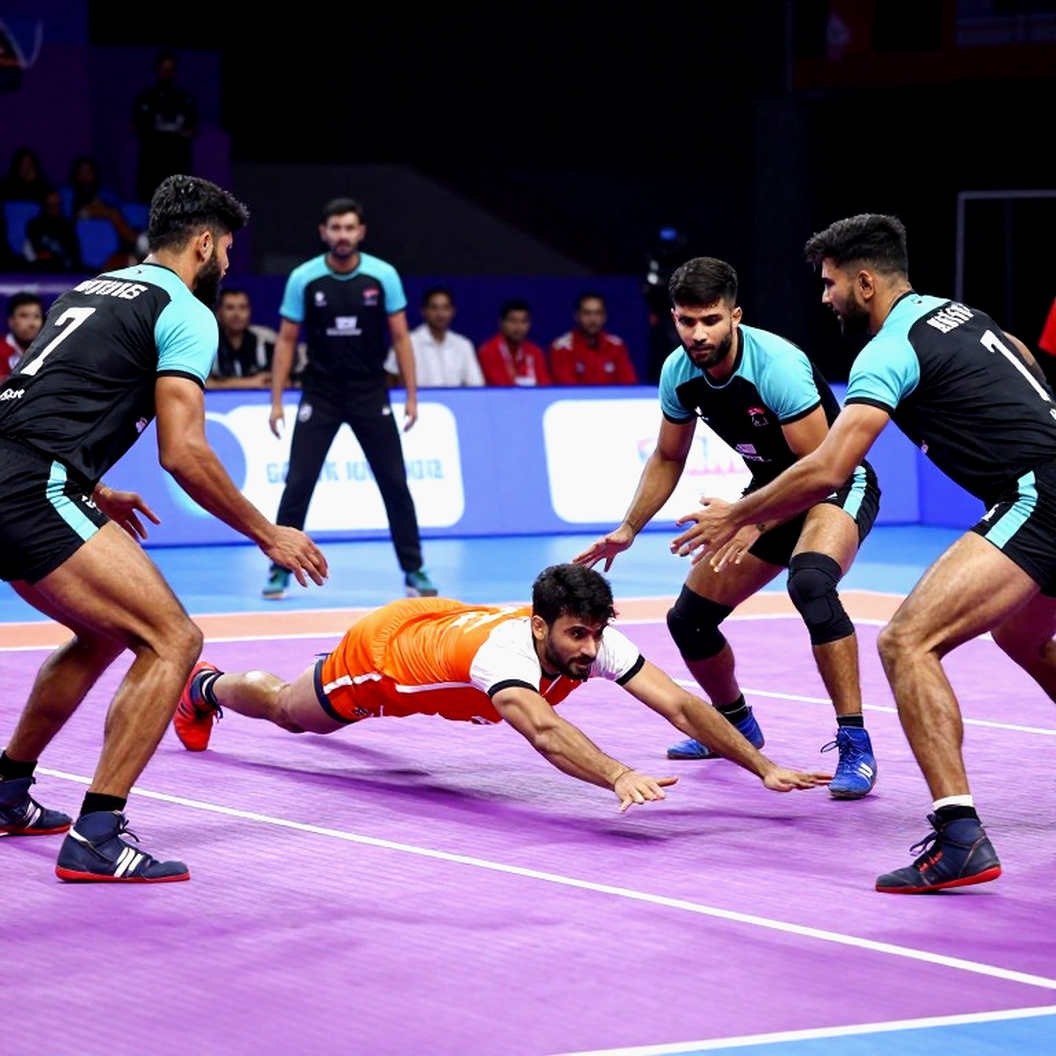
The first day of the Commonwealth Kabaddi Championship 2026 in Ahmedabad produced five clear results: Sri Lanka beat Uganda 48-21, India defeated England 46-26, Uganda overcame Malaysia 45-29, Kenya beat Singapore 48-28, and Scotland defeated Australia 59-30.
On paper, those margins suggest an expanding international game. A closer audit produces a more cautious reading. The published scores and standings are arithmetically consistent. Group rankings follow wins and then score difference. That gives the factual layer of the report credibility. The competitive information remains thin because line-ups, qualification rules, technical statistics and the rules variant are missing.
The first clue was not the result; it was the silence after it. The missing information is where this event’s real story begins.
Context: Two Groups, Unequal Routes
Group A contains seven teams, while Group B contains six. In a full round-robin format, Group A teams will play six matches and Group B teams five. That imbalance matters when score difference is used as a ranking tiebreaker.
Sri Lanka lead Group A on +27, ahead of India on +20 and Uganda on +16. Scotland lead Group B on +29, ahead of Kenya on +20. The calculations match the published results. Nigeria, Bangladesh and Canada appear in the table despite not playing on Day 1. Their positions are mechanical placeholders, not evidence of competitive strength.
The qualification structure has not been stated. Without knowing whether the top two or top four teams advance, the strategic value of score difference cannot be assessed. The format may also encourage strong sides to chase large margins against weaker opponents.
The event report does not confirm whether matches use Standard Style or Circle Style rules. Standard Style normally involves seven players on a 13m × 10m court, a 30-second raid, continuous cant, bonus-line scoring, do-or-die raids, super tackles and all-outs. That distinction matters because teams from Scotland, England, Canada and Australia may draw heavily from Punjabi diaspora kabaddi cultures, where Circle Style is influential.
Core Analysis: Big Scores, Small Dataset
The Day-1 table verifies the results more effectively than it measures team strength. Total match scores ranged from 69 to 89 points. The Scotland-Australia match produced the highest combined score, 89. That may indicate poor defensive structure, but no tackle success rate, raid efficiency, bonus count or all-out data has been published.
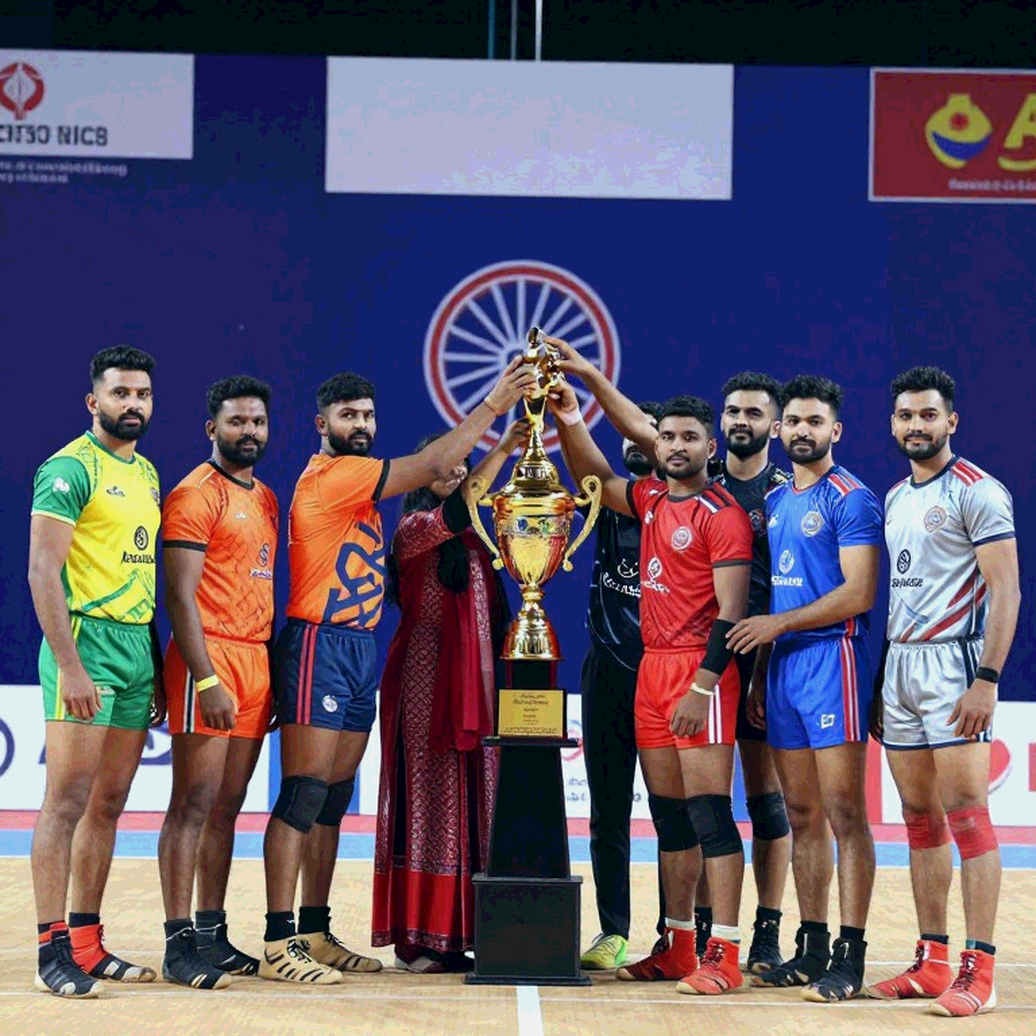
Scotland’s Lovepreet Brar scored 23 raid points in the 59-30 victory. That represents at least 39% of Scotland’s total score and probably more than half of the team’s raid scoring once tackle, bonus and all-out points are removed from the total. The figure is substantial, but one match against the day’s weakest defence cannot establish a sustainable performance level.
Based on my years of watching matches, a raider’s true level requires a much larger sample—usually eight to ten matches, especially when the opponent’s chain-tackle structure is unknown. Brar’s performance deserves tracking, not premature star billing.
Scotland’s result shows both individual quality and offensive concentration. A disciplined defence from India, Sri Lanka or Bangladesh could target Brar with ankle holds, blocks and early pressure. The response of Scotland’s secondary raiders will reveal more than the 23-point headline.
India’s 46-26 victory over England is also difficult to interpret. The report does not say whether India fielded a senior national side or a development group. No Indian player statistics are provided. A 20-point win is strong, but Sri Lanka’s +27 margin was larger. Without selection information, the result cannot support a meaningful conclusion about India’s level.
Sri Lanka conceded only 21 points, the best defensive figure of the day. Kenya’s 48-28 win over Singapore and Uganda’s 45-29 victory over Malaysia are also significant. Two African wins over Asian opposition provide a genuine signal that deserves follow-up. They do not yet establish a shift in the global hierarchy.
Contrarian Angle: The Commonwealth Label Has Limits
The official narrative may frame 13 men’s teams as proof of kabaddi’s international growth. The number is useful, but a membership label is not the same as competitive depth. Kabaddi is not part of the official Commonwealth Games programme, and the report does not mention Commonwealth Games Federation sanctioning. The “Commonwealth” title is therefore an event label, not a guarantee of elite sporting standard.
Iran’s absence exposes the limitation. Iran is one of the strongest men’s kabaddi nations after India and has already disrupted India’s dominance at the Asian Games. Without Iran, India’s 46-26 win cannot be treated as a test against the full global top tier. South Korea’s absence matters too.
Internationalisation means more than adding flags. It requires transparent rules, comparable competition and accessible performance data. The absence of quotations, technical statistics and player-level information suggests that the available report was built from a results sheet or standings feed rather than from detailed venue reporting.
The hiatus was not empty; it was a database of decisions. This event’s missing data shows that international kabaddi still operates behind the scoreboard. Viewers know who won. They are rarely told how.
Takeaway
Bangladesh’s first match will alter the Group B picture. The team currently placed third without playing must now establish its real level. The next India-Sri Lanka results will show whether the opening margins were meaningful or merely early arithmetic.
Organisers should publish raid attempts, successful raids, tackle efficiency, super raids, super tackles, all-outs, line-ups, rules and qualification criteria after every match. Otherwise, the championship will remain closer to a standings screenshot than a fully documented international competition. The real story will be in the footnotes attached to the next results.