
Sindhu's Fight, An Se Young's Grip: French Open Final Settled in 61 Minutes
**प्रश्न: फ्रेंच ओपन 2026 महिला एकल फाइनल कौन जीता?** उत्तर: दक्षिण कोरिया की एन से यंग ने पीवी सिंधु को 61 मिनट में 16-21, 21-11, 21-12 से हराया (सिंधु के नजरिए से स्कोर 21-16, 11-21, 12-21)। एन से यंग विश्व की नंबर एक और टॉप सीड हैं; यह इस टूर्नामेंट में उनका चौथा खिताब बताया गया है (स्वतंत्र सत्यापन बाकी)। **प्रश्न: मैच का निर्णायक मोड़ क्या था?** उत्तर: सिंधु ने पहला गेम 11-11 के बाद 10-5 की बढ़त बनाकर जीता, लेकिन दूसरे गेम में एन से यंग ने लंबा अंक-सिलसिला बनाकर 21-11 से बराबरी की और तीसरे गेम में 9-9 के बाद ब्रेकअवे कर 21-12 से मुकाबला समाप्त किया। **प्रश्न: आंकड़ों में क्या खास है?** उत्तर: कुल 102 अंक, 61 मिनट, यानी लगभग 36 सेकंड प्रति अंक — लंबी रैलियों का संकेत। दूसरे और तीसरे गेम में सिंधु केवल 23 अंक ले पाईं जबकि प्रतिद्वंद्वी ने 42 लिए। **प्रश्न: आमने-सामने का रिकॉर्ड क्या है?** उत्तर: 11 मुकाबलों में सिंधु केवल दो बार कोई गेम जीत पाई हैं (इस मैच सहित) — यह शैलीगत काउंटर का संकेत है। **प्रश्न: सिंधु का 2026 सीजन कैसा रहा?** उत्तर: जापान ओपन खिताब और फ्रेंच ओपन उपविजेता — एक ही सीजन में दो सुपर 750 पोडियम; अनुमानित रूप से उपविजेता स्थान से करीब 9,350 रैंकिंग अंक। **प्रश्न: टूर्नामेंट का दर्जा क्या है?** उत्तर: बीडब्ल्यूएफ वर्ल्ड टूर सुपर 750, सीजन के अंतिम चरण में, वर्ल्ड टूर फाइनल्स क्वालिफिकेशन विंडो के भीतर। **सीमाएं:** स्रोत में स्मैश गति, अनफोर्स्ड एरर, रैली वितरण या नेट जीत दर जैसे शॉट-स्तरीय आंकड़े नहीं हैं; ड्रॉ का रास्ता भी नहीं बताया गया। सभी रणनीतिक निष्कर्ष स्कोर के आकार से निकाले गए अनुमान हैं।
Paris: In the women's singles final of the French Open 2026, India's PV Sindhu once again ran into the wall she has found hardest to breach. World No. 1 An Se Young of South Korea won 16-21, 21-11, 21-12 in 61 minutes to claim her fourth title at this event. Sindhu had taken the opening game 21-16, but the match changed completely after that. Across the next two games Sindhu took only 23 of the 42 points played — a scoreline that says the gap was not about one game but about capacity, consistency and physical endurance.
Game 1: a short window that closed quickly
What Sindhu did in the first game was the best version of her familiar style — high contact point, aggressive drives, sharp control of the court. From 11-all she built a 10-5 run and took the game, capitalising on An Se Young's early errors. Analytically this is a short-window formula: score fast, before the opponent re-establishes her defensive length and rhythm. The real question was whether Sindhu could repeat that intensity across three games. The answer arrived in Game 2.
Games 2 and 3: the shape of the score is the real information
In the second game An Se Young found her 'characteristic consistency', produced a long run of points and took it 21-11. In the third, the match was level at 9-9 before the Korean broke away on the back of exceptional court coverage and defence, closing it 21-12. A total of 102 points in 61 minutes works out at roughly 36 seconds per point — evidence that the rallies were longer than normal.
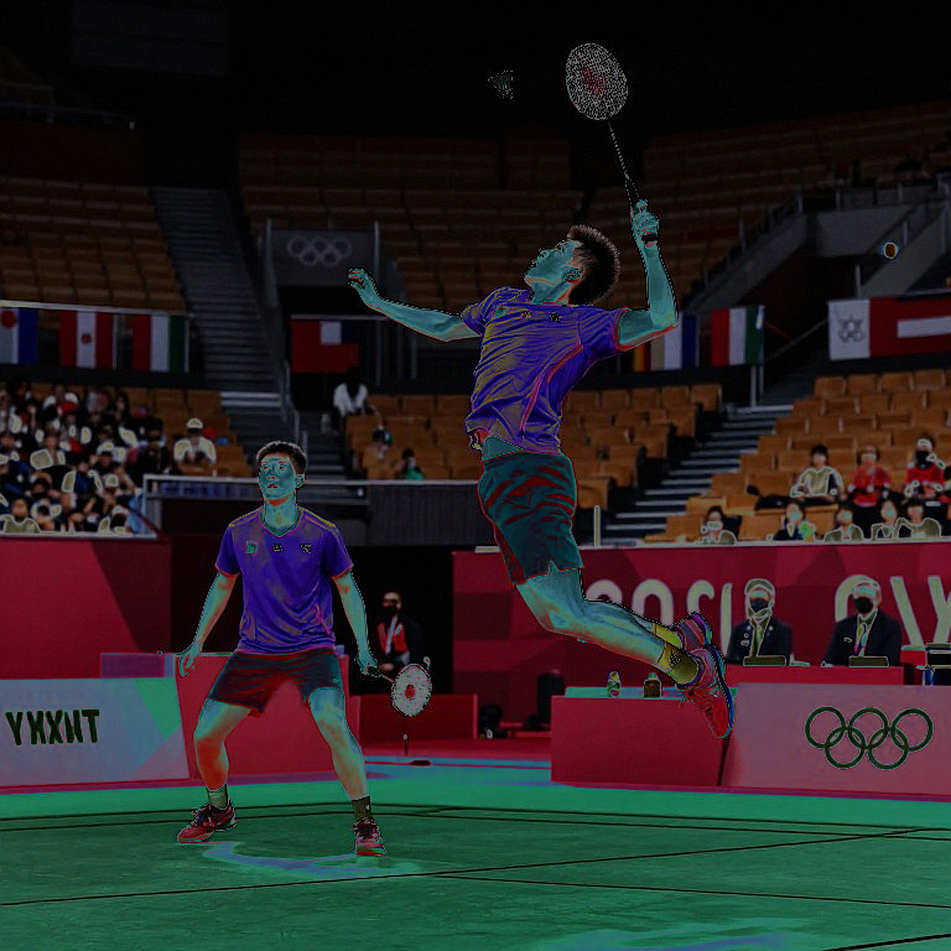
The most informative data point here is not the result but the shape of the score. Losing 11-21 and 12-21 after winning the first game is not a tactical defeat; it is a collapse of capacity and consistency. In a genuinely close matchup, the player who takes Game 1 usually stays within three to five points in the games that follow. A combined 23-42 across Games 2 and 3 places the true gap far wider than the 'she took a game off her' framing suggests.
Attack versus retrieval: the arithmetic of styles
The match followed a classic template — an attacking player against a defensive counter-attacker — and the template resolved in favour of the retriever. An Se Young's mechanism is defence-to-counter, which is low-variance and repeatable: she does not need to out-hit her opponent, only to extend the rally until the attacker's quality or accuracy degrades. Against a 31-year-old attacking player this is close to a structural counter. Sindhu herself admitted that 'long rallies made converting opportunities difficult' — an attacker's confession that she was reaching the positions but missing the finish. At 31, that is far harder to fix than a tactical adjustment.
Head-to-head: eleven meetings, two games
The numbers are stark. The two have met 11 times and Sindhu has taken a game on only two occasions — this match included. This is not merely a losing record; it is a record in which Sindhu has rarely even been competitive at game level. The improvement is real but marginal. It is best classified as a bogey-opponent pattern, in which a psychological layer sits on top of the technical one and does not yield easily to scouting.
Sindhu's 2026 season: a genuine rise with a clear ceiling
This defeat does not damage Sindhu's season. In 2026 she won the Japan Open title and has now finished runner-up at the French Open — two Super 750 podiums in a single season, solid evidence of a real form recovery at the age of 31. Both results came at the top tier, not at Super 100 or Super 300 events. The runner-up finish is worth an estimated 9,350 world ranking points and, combined with the title, gives her a strong seasonal base.
But the rise has a clear ceiling, and it is set at the top of the draw. 'Two Super 750 podiums' and 'two games in 11 meetings' are not contradictory facts; together they describe a player who is clearly top-eight calibre but clearly not top-one calibre. The most probable reading is that at this stage of her career her level sits between the quarter-finals and the final, with her title chances depending substantially on whether An Se Young is in the draw. Sindhu's own framing — 'a lot of space, a lot of room still there' — is analytically accurate and psychologically healthy: the statement of a player who has accepted the gap without conceding it.
An Se Young: the win came from her B-game
The Korean's victory, by contrast, did not come from a peak performance but from her baseline. Losing the first game and then taking the next two by 10 and 9 points is the signature of a player whose floor is high enough to absorb a lost game and reassert control. A fourth title at the same event is the compound effect of venue familiarity, understanding of the court and drift, and protected top seeding — a persistent structural advantage rather than a one-off. Her real risk is not competitive but physical: an unbroken run of deep finishes and a defence-dependent style impose cumulative load on the lower limbs.
Tournament context: Super 750 and the closing phase of the season
The French Open is a BWF World Tour Super 750 event — one tier below the Super 1000s, but with substantial points and prize money. Its significance rises for both players at this point in the calendar, because it falls inside the World Tour Finals qualification window and the annual fatigue period. For An Se Young it is proof of durability across a long schedule; for a 31-year-old Sindhu it is a load spike immediately before the season-ending Finals, a scheduling-risk signal. It should also be remembered that a Super 750 title or runner-up finish is excellent, but it is not world-championship-grade proof.
What the data do not show
A major limitation of this report is that it contains no shot-level statistics of any kind — no smash speeds, no unforced error counts, no rally-length distribution, no net-point win rate. Every tactical conclusion above is a structural inference drawn from the shape of the score, not a verified finding. Nor is it clear which players Sindhu beat on the way to the final; without that, the difficulty of her draw cannot be assessed. The claim of a 'fourth title' for An Se Young at this event is also not independently verified.
One thing, however, is clear: Sindhu's resurgence is real, but its ceiling is defined by players of An Se Young's calibre. This final in Paris is the latest illustration of that equation — one game can be won, three cannot.