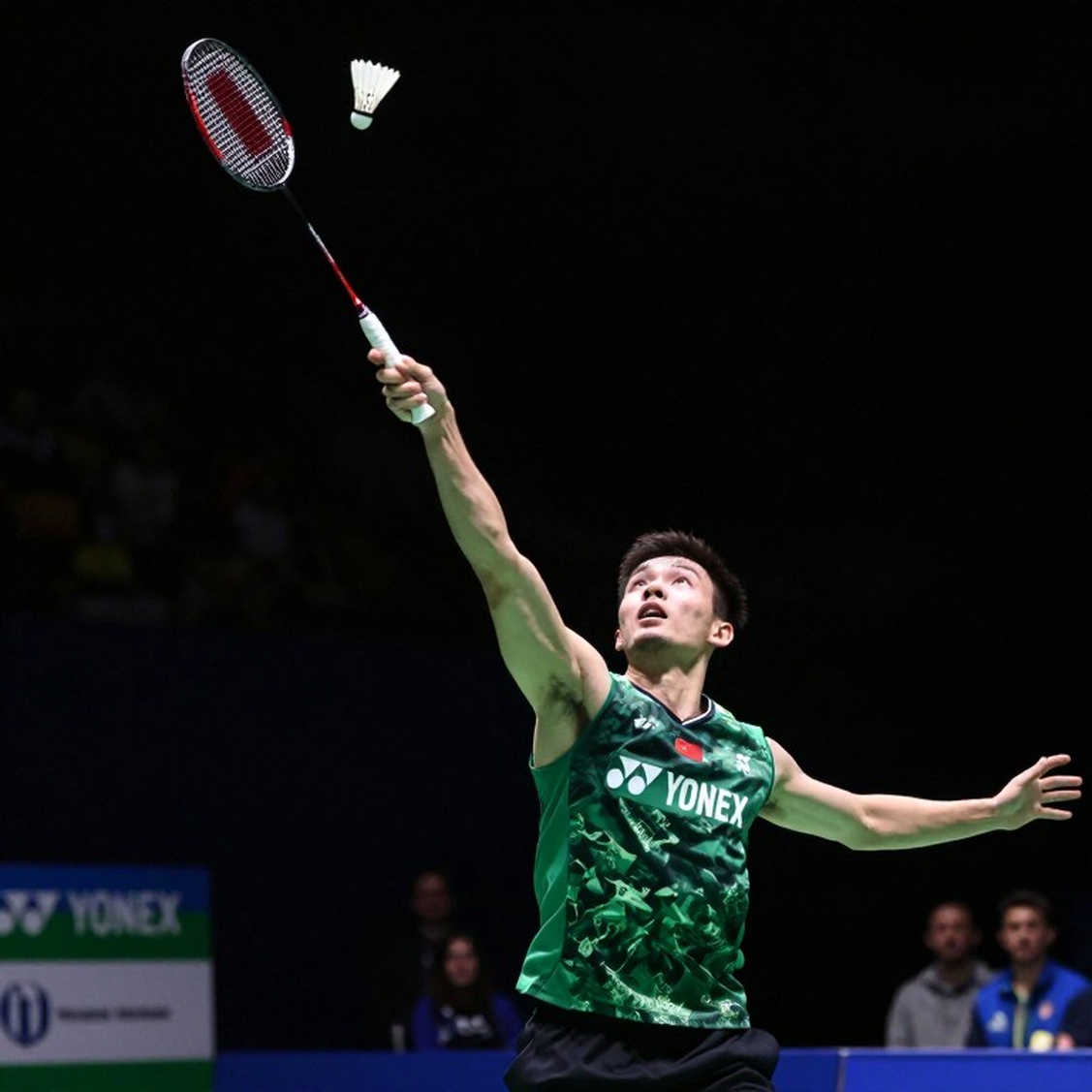
Nguyen Thuy Linh Wins Ninth Straight National Title, But Vietnam's Women's Badminton Faces a Deepening Succession Crisis
गुयेन थुई लिन्ह ने 25 अक्टूबर 2026 को क्वांग त्री में वियतनाम राष्ट्रीय टॉप-प्लेयर्स बैडमिंटन चैंपियनशिप का महिला एकल खिताब जीता, फाइनल में वू थी ट्रांग को 21-11, 21-8 से हराया। यह उनका लगातार नौवां राष्ट्रीय खिताब (2018-2026) है। 28 वर्षीय थुई लिन्ह विश्व रैंकिंग में 28वें स्थान पर हैं, जबकि वू थी ट्रांग करीब 57 स्थान नीचे हैं। यह घरेलू चैंपियनशिप बीडब्ल्यूएफ वर्ल्ड टूर का हिस्सा नहीं है और इससे विश्व रैंकिंग अंक नहीं मिलते। मुकाबले का सबसे महत्वपूर्ण संकेत उत्तराधिकार की खाली जगह है: लगातार दो वर्षों तक दो उम्रदराज खिलाड़ियों का फाइनल में पहुंचना दिखाता है कि युवा पीढ़ी में कोई चुनौतीकर्ता नहीं उभरी। नोट: कुछ रिपोर्टों में मैच को 2-1 की वापसी बताया गया था, लेकिन विस्तृत सेट स्कोर सीधे सेटों में 2-0 की जीत की पुष्टि करते हैं।
Quang Tri: Vietnam's top women's singles shuttler Nguyen Thuy Linh claimed her ninth consecutive national title, defeating Vu Thi Trang 21-11, 21-8 in the final of the National Top-Players Badminton Championship 2026. The six-day tournament, held in Quang Tri from 20 to 25 October, featured around 150 athletes from 14 provinces and cities competing across five events. For the 28-year-old Thuy Linh, the run stretches back to 2026 without interruption, meaning no Vietnamese woman has taken the title from her across nine editions.
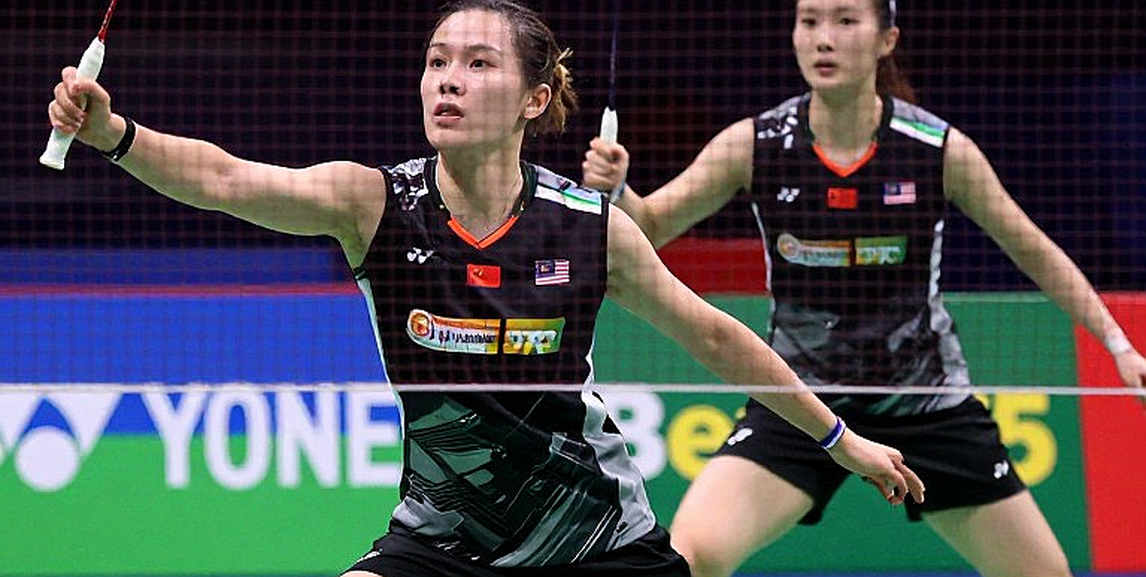
The scoreline looks one-sided, but the start of the match was not. Vu Thi Trang kept level at 6-6 in the opening game, and that was precisely the point at which Thuy Linh changed gear. She reeled off five straight points to lead 11-6 and closed the set 21-11. The second game widened further; 21-8 suggests the veteran's physical capacity had broken down after the long rallies of the first. One clarification is necessary here: some early reports described the match as a 2-1 comeback, but the detailed set scores of 21-11 and 21-8 confirm a straight-sets 2-0 win. This was a controlled, one-sided victory, not a comeback.
The shape of the game: control through movement
Thuy Linh's winning mechanism is not a new technical innovation but an old and reliable control style. She kept placing the shuttle in varied directions, forcing her opponent to keep running, which drained the 34-year-old's stamina and induced errors. In badminton terminology this is movement attrition: making an opponent cover maximum court area so that her energy is spent and her quality drops at the end. The method is highly effective against slower opponents, but its transferability against younger, faster world-class players is limited.
Only one data point from this match carries real tactical meaning: the passage from 6-6 to 11-6 in the first game. It suggests Thuy Linh spends the opening points reading her opponent and then changes gear to create separation. That is the habit of a mature competitor, but a single sample cannot establish whether it is a stable pattern or a one-off. No smash speeds, average rally lengths, error rates or net-point data are available in this report, so any claim of technical superiority rests on the outcome alone, not on data.
The opponent and the ranking gap
Thuy Linh currently sits at world No. 28. According to the report, Vu Thi Trang is around 57 places below her, placing her roughly around No. 85. That gap limits the diagnostic value of the match. When an opponent is ranked that far below, a wide margin mainly confirms expected dominance rather than revealing anything new. In other words, this was closer to a confirmation than a test for Thuy Linh.
Still, it would be unfair to judge Vu Thi Trang purely on ranking. She has been an established figure in Vietnamese badminton, and she was also the finalist in 2026. The same two players reaching the final in consecutive years is a signal in itself, and not a positive one.
Career phase and achievements
Born on 20 November 2026, Thuy Linh is 28 and in the peak phase of her career. She is a three-time Vietnam Open champion and has represented Vietnam at the Tokyo 2026 and Paris 2026 Olympics. Nine consecutive national titles plus two Olympic appearances form a profile that invites no questions at the domestic level.
But the gap between domestic dominance and the global level cannot be ignored. World No. 28 is a solid position, not an elite one. At events such as Super 1000 and Super 750, that ranking places her outside the protected seeding band, which means early-round meetings with top-8 seeds are a recurring possibility. Draw luck therefore becomes a major variable in her results at major tournaments.
The status of the tournament: a domestic championship, no world points
It matters that the Vietnam National Top-Players Championship is not part of the BWF World Tour. It is a domestic national championship and awards no world-ranking points. That means the title brings no ranking gain and carries no ranking risk, and no inference about world-level form can be drawn from the result.
The scale of the event presents a mixed picture. On one hand, participation by 150 athletes from 14 provinces and cities across five events shows a functioning competitive structure exists in the country. On the other, the same pair of senior finalists reaching the final two years running shows the top layer is very thin. The format is single elimination, in which uncertainty for a stronger player over six days is low, so the structure itself left little room for an upset.
The most serious signal: a succession vacuum
The most significant analytical signal in this report is not the title but the succession vacuum. Two relatively older players reaching the final for a second consecutive year clearly indicates that no younger player has emerged capable of reaching this level. That is not merely a fact but a structural concern.
Vietnamese women's singles currently rests on a single pillar. One player is inside the world top 30 and no one else appears close to her. The runner-up is considerably older and no young challenger has been named. This is a fragile landscape, not a strong one. In regional comparison, neighbours such as Thailand, Indonesia and Malaysia have historically fielded multiple top-100 players at once. Against them, Vietnam's depth looks thin.
The risk surface
The first risk is injury. A 14-year professional career at 28, combined with a style that demands sustained workload, creates a medium-level chronic-load injury risk, though this report contains no information on it.
The second risk is competitive, and it is subtler. Winning at home repeatedly can create a comfortable zone in which a player avoids the harshest international tests. When the 2026 and 2026 finals feature the same pairing, it is clear the domestic stage is not sharpening the player, only reassuring her. That is not the ideal preparation ahead of major international events.
The third risk concerns ranking and qualification. No. 28 lies outside the seeding band, so difficult draws at major events are normal. The route to improving this is accumulating points at Super 500 and Super 750 level to enter the top 16.
The fourth and largest risk is structural. If Thuy Linh's form dips or she steps away before a successor emerges, Vietnam's women's singles could disappear entirely from major tournaments. That risk belongs not to one player but to the whole category, which is why its level is high.
The road ahead and signals to monitor
The post-Paris 2026 cycle is over and the build-up to LA 2028 is under way. Thuy Linh will remain the flagship of Vietnamese women's singles through this cycle as well, but the question is who comes after her. This report offers no answer.
Three signals deserve continuous tracking. First, whether a young Vietnamese woman reaches the national final or enters the world top 200. Second, which direction Thuy Linh's ranking moves over the next 12 to 24 months, toward the top 16 or below No. 35. Third, who contests the 2027 national final, a new name or the same old pairing.
The conclusion is that this is a domestic-scope story. Nguyen Thuy Linh's ninth consecutive title confirms her as the unchallenged domestic No. 1, but its real analytical value lies in the succession vacuum it surfaces. The joy of the title is genuine, but the structure beneath it is weak, and that is the most important point in this report.