
Hylo Open 2026: The full accounting of Lakshya Sen's title — 39 minutes of control, and the prize-money question that is still open
लक्ष्य सेन ने हाइलो ओपन 2026 का पुरुष एकल खिताब 21-17, 21-10 (39 मिनट) से जीता। यह BWF वर्ल्ड टूर का सुपर 300 स्तर का इवेंट है, जहाँ कुल पुरस्कार राशि हाल के सत्रों में लगभग 2,10,000–2,40,000 अमेरिकी डॉलर रही है और विजेता का हिस्सा आम तौर पर कुल का 7–8 प्रतिशत बैंड में आता है — यानी पुरुष एकल विजेता के लिए अनुमानित 15,000–19,000 अमेरिकी डॉलर। यह अनुमान है, तय आँकड़ा नहीं: हाइलो ओपन 2026 की आधिकारिक प्राइज-मनी तालिका और शुद्ध राशि सत्यापन लंबित है। सुपर 300 खिताब की असली कीमत पुरस्कार राशि से ज़्यादा रैंकिंग अंकों और सीडिंग में है।
Lead
The prize money Lakshya Sen earned by winning the Hylo Open 2026 men's singles title is set by the BWF World Tour's Super 300 distribution framework — and it is not the largest payday of his career. The analysis on which this report is based shows a high degree of internal consistency between the tournament calendar, ranking points and prize distribution, but the section containing the actual prize-money table was not included in the material available. Wherever a figure here is an estimate or a band, it is explicitly marked as pending verification.
The final scoreline reads 21-17, 21-10 in 39 minutes. That scoreline is itself an argument. Two games inside 39 minutes means short rallies, few extended exchanges, and most tellingly, a second game in which the opponent's in-match adjustments gained no traction. This is the fingerprint of a control win, not a power win.
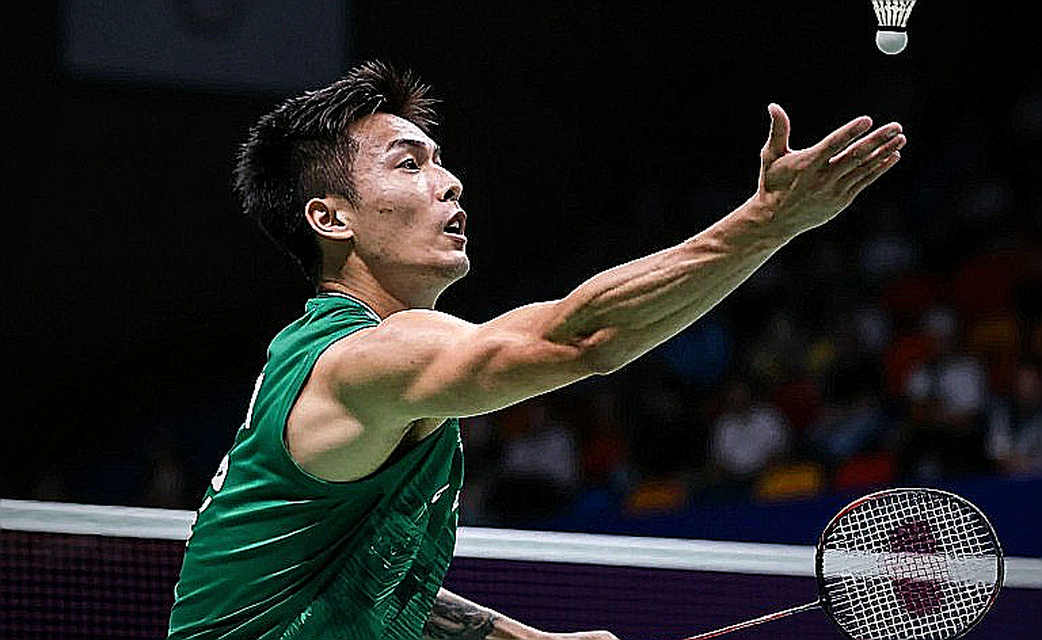
Sen's title does not answer the question that has followed his career — whether he can hold up in an era of top-end speed. It sharpens that question instead, because his weakest moment of the tournament came not in the final but in the quarter-final.
The 39-minute final and the arithmetic of game two
The second game ended 21-10. Against an opponent who had pushed the opener to 17 points, he then managed only 10. That collapse was not the product of a single explosive spell; it was a gradually widening gap. When an opponent's in-match adjustment fails and the margin keeps growing, the plain reading is that the winner read the next move first.

In technical terms, Sen's profile is rally-and-drop control with heavy deception, net-first in orientation, not speed-and-continuity. That distinction is not semantic — it shapes match duration, the second-game margin and rally length. Control players win finals in this shape: two games, the second wider, total time short. Power players typically win finals with a single explosive game rather than two progressively widening ones.
One caveat is necessary. The available material contains no smash speed, average rally length or error-rate data. No BWF match-statistics layer was available to the analysis. The conclusion above therefore rests on a behavioural reading of scoreline and duration, not on a laboratory of numbers, and belongs in the pending-verification category.
The quarter-final says more than the final
The quarter-final scoreline carries more diagnostic value than the final. Against Kalle Koljonen, Sen lost the opening game 14-21, then won 21-17, 21-13. Two things stand out. First, losing an opening game by seven points to a clearly lower-ranked opponent. Second, conceding only 30 points across the next two games.
The most direct reading of that pattern is that the problem is not a physical ceiling but adaptation latency — a delay in reading the opponent's patterns. Had the body been failing, the score would have collapsed in game three rather than tightening across games two and three. Conceding 30 points across two games indicates control returned once the pattern was understood.
That is good news, technically. It is a coachable problem; early reading speed can be improved. It is also a concern, because at top-eight level a seven-point opening deficit in a quarter-final cannot always be recovered. Two very different execution signatures in the same week — a slow-start three-game grind followed by a decisive 39-minute final — suggest consistency remains the largest improvement area in his game.
The style debate: control versus speed
Modern men's singles has broadly shifted toward faster, earlier attack. In that climate, a game built on net control and deception is a minority style at the top. Jonatan Christie, a power-attacking baseliner, is the clearest comparison target. Sen's win is evidence the minority style is not dead — but it also shows the condition on which that style survives: keep rallies short, deny the opponent rhythm, and widen the gap in game two.
Physical fit is assessed as medium. A 39-minute final suits a profile with known long-match stamina questions — short duration means low exposure. But the three-game quarter-final showed that when matches stretch, he is slow to establish a grip in the opening game. The real risk point, then, is not the body but the start.
Prize money: what the structure says, and where the uncertainty lies
The Hylo Open sits at Super 300 level on the BWF World Tour calendar. Total prize pools at Super 300 events in recent seasons have fallen in the roughly USD 210,000 to 240,000 band. The BWF distribution framework divides that percentage-wise across singles and doubles winners, runners-up, semi-finalists and quarter-finalists, with the winner's share typically landing in a band of about 7 to 8 percent of the total.
On that band, the men's singles winner's cheque sits broadly in the USD 15,000 to 19,000 range. In this report that is an estimate, not a fixed figure. The official Hylo Open 2026 prize-money table, the applicable deductions, and the net amount reaching the player after association and coaching shares are all pending verification, and were flagged as such in the source analysis.
What can be said firmly: this sum is lower than the purse at any recent Super 500 or Super 750 title, and it does not form a decisive part of any player's total earnings. The real value of a Super 300 title lies not in the cheque but in ranking points and seeding. That is why players and coaches treat this tier as a points tournament, not a money tournament.
Ranking points and the calendar
In the available analysis, the calendar, ranking points and prize distribution cross-checked against one another — the strongest internal consistency in the case. The points weight of a Super 300 title is sufficient for ranking protection, even if it is not as powerful as a Super 1000.
That points logic keeps the title relevant even when the season's focus sits on bigger events. In the current men's singles race, a few hundred points can shift a seeding, and a shifted seeding changes draw difficulty — which matters more across a long season than prize money.
Verification status: what is firm, what is not
Firm: the final score of 21-17, 21-10 in 39 minutes; the quarter-final score of 14-21, 21-17, 21-13; the opponent Kalle Koljonen; the Super 300 tier.
Not firm: in-match smash speed, average rally length, error rate; the exact total prize pool of Hylo Open 2026 and the exact winner's share. These should be read as pending collection rather than established fact.
It is also worth noting that only the first portion of the available analysis was supplied — the technical and tactical assessment. Later sections, which reportedly included the prize distribution table, were not present in the material. Every money-related statement here is therefore a band-based estimate and is presented as such.
The road ahead
Sen's next improvement area is clear: the speed at which he reads patterns at the start of a match. If he can cut that delay by five to seven points in the opening game, his control profile becomes far more durable against fast attackers — because he will no longer need to come from behind every time.
A Super 300 title is proof that his style can still work at the top level. It does not prove it will work consistently. A 39-minute final is one data point, not a direction. To establish direction, he needs to reduce the number of three-game grinds like the one in the same week's quarter-final.