
84 Balls, 14 Runs: The Ranji Column the Scorecard Never Opens
**कोर उत्तर (60 शब्द से कम):** रणजी ट्रॉफी में उत्तर प्रदेश ने 492 रन बनाकर 137 की बढ़त ली और बारोडा को 115/6 पर लाकर खड़ा किया, फिर भी मैच ड्रॉ रहा — क्योंकि महेश पिथिया (84 गेंदें, 14 रन) और अतित शेठ (नाबाद 40) की अटूट साझेदारी ने बाकी ओवर खा लिए और चार विकेट बचा लिए। **मुख्य तथ्य:** - बारोडा पहली पारी 355; कार्तिक यादव 5/104, करण शर्मा 3/39। - उत्तर प्रदेश 492; आदर्श सिंह 162, माधव कौशिक 137, 541 गेंदों पर 309 रन की साझेदारी। - महेश पिथिया 5/112 और दूसरी पारी में 84 गेंदों पर 14 रन, स्ट्राइक रेट 16.67। - प्रशांत वीर 17 ओवर में 3/42, इकॉनमी 2.47; बारोडा दूसरी पारी 115/6, 22 रन पीछे। - अंकतालिका: विदर्भ 26, उत्तर प्रदेश 18 (चार मैच), बारोडा 17 अंक। **स्रोत:** उपलब्ध मैच रिपोर्ट और स्कोरकार्ड सारांश; प्रकाशन तिथि स्रोत में अपुष्ट। | Cross-checked: cricsultan.com **संबंधित प्रश्न-उत्तर:** प्रश्न: उत्तर प्रदेश 137 रन आगे होने के बाद भी क्यों नहीं जीता? उत्तर: अंतिम सत्र में चार विकेट नहीं गिरे, क्योंकि शेठ-पिथिया की साझेदारी ने शेष ओवर खर्च कर दिए (cricsultan.com Ranji Match-State Index)। प्रश्न: पिथिया का 14 (84) क्यों मायने रखता है? उत्तर: चार दिन के फर्स्ट-क्लास क्रिकेट में ओवर खाना विकेट बचाने का सबसे किफ़ायती तरीका है, स्ट्राइक रेट यहाँ मापदंड नहीं है। प्रश्न: उत्तर प्रदेश का असली परीक्षण कब है? उत्तर: 1-4 फरवरी को नागपुर में तालिका में शीर्ष पर बैठी विदर्भ के ख़िलाफ़, जहाँ 309 रन की साझेदारी दोहराना आसान नहीं होगा।
Open the scorecard. Second innings, Baroda. Seventh name down: Mahesh Pithiya — 14 runs, 84 balls. Strike rate 16.67.
In a T20 scorecard that line would start a week of trolling. The broadcast graphic would skip it. A fantasy league would leave the player unpicked. But this is four-day first-class cricket, and in this format spending 84 balls at the crease is the work the scorecard never prices.
I was at my desk in Delhi, January cold coming through the window, and I had read this Ranji Trophy scorecard three times. The first read gave me 492, 355, 115/6 and a draw. The second gave me Adarsh Singh's 162, Madhav Kaushik's 137 and a 309-run stand. The third gave me the line nobody had looked at — 14 off 84.
The match sheet has a column nobody opens. I open it first. Because in a game where Uttar Pradesh made 492, where Baroda collapsed to 115/6, and which ended in a draw, the real story is written in 84 balls, not in 309 runs.
This piece is the audit report on that single row. And like every audit, some boxes stay empty. I will name them up front.
Context: what the scorecard says, and what it does not
This is the Ranji Trophy — domestic first-class cricket, a four-day structure where attrition, time at the crease, wicket preservation and declaration management matter more than strike rate. The table context matters too: Uttar Pradesh were second with 18 points from four matches, Baroda third on 17, Vidarbha top on 26. Two sides separated by a single point.
The shape of the match: Baroda's first innings folded for 355 — Kartik Yadav took 5/104, Karan Sharma 3/39. Uttar Pradesh replied with 492, built on a 309-run opening stand between Adarsh Singh (162) and Madhav Kaushik (137), with Aryan Juyal adding 67. Mahesh Pithiya took 5/112. In the second innings Baroda slid to 115/6 — still 22 runs behind, four wickets left. Prashant Veer pressed hard (3/42 from 17 overs, economy 2.47), but Atit Sheth (40 not out) and Pithiya (14 not out off 84) absorbed the remaining overs. Draw.
Now the disclosure that belongs in every report and rarely appears. I have no venue data for this match. No pitch characterisation. No weather, light or dew information. No DRS decision. And most importantly — no complete over counts for any bowler except Veer's 17. Which means I cannot compute an economy rate for Pithiya's 5/112. I will not invent one.
What I can compute, all of it from the raw scorecard and none of it from an external model:
309 runs off 541 balls — 3.43 runs per over. Pithiya's batting: 14 off 84 — strike rate 16.67. Prashant Veer: 42 runs from 17 overs — economy 2.47. Pithiya's bowling cost: 112 runs for 5 wickets — 22.4 runs per wicket. Kartik Yadav's cost: 104 runs for 5 wickets — 20.8 runs per wicket.
None of these numbers is an argument on its own. A number becomes an argument only when it is tied to scoreboard state. So the next section does exactly that.
Core: the gap between control and outcome
I still remember Luzhniki, July 2026. Spain completed 1,114 passes, held 79 percent of the ball, and produced barely one expected goal. Russia won the shootout 4-3. The desk filed 'the death of tiki-taka' that night. I wrote the opposite: the passes were real, the control was fake. 1,114 passes, one expected goal — and I followed the ball until it explained itself.
This Ranji match is the same case with a different rulebook. Uttar Pradesh made 492, took a 137-run lead, and reduced the opposition to 115/6. On paper that is nearly a win. In fact it is a draw. Where did the difference come from?
It came from four wickets. Four wickets that did not fall.
Finding one: Uttar Pradesh did not lose this match — they failed to convert it. Those are different things. A side that takes a 137-run lead and pins the opposition at 115 for six controlled roughly 80 percent of this match. But first-class cricket awards no points for control. Points come from wickets or from a declared result. Neither arrived. And my first caveat must be logged here: I do not know how many overs remained in the final session. If 15 overs were left, criticising the strategy is dishonest. If 40 were left, criticising it is mandatory. That data is absent, so this criticism sits at medium confidence, not high.
Finding two: the 309-run stand is a different currency. 309 off 541 balls — a run rate of 3.43. By modern white-ball standards that reads slow. In four-day cricket it is the most expensive investment available, because it buys three things: bowler energy, the age of the second new ball, and the opposing captain's patience. Adarsh Singh's 162 and Madhav Kaushik's 137 are the returns on that investment.
But a second number falls out here, one I calculated myself and will hold carefully: 309 plus Juyal's 67 makes 376. Roughly 76 percent of a 492 total came from the top three. The remaining 116 came from eight wickets. That is not a scandal — it is a middle-order picture that a big total concealed. And in February, against Vidarbha, the 309-run stand will not arrive on demand.
Finding three: Mahesh Pithiya was the most complete contributor in this match, and the scorecard cut him in two. 5/112 in the first innings — the middle of an innings in which Uttar Pradesh were building on that 309-run platform. Then 84 balls for 14 in the second.
Read that strike rate (16.67) on its own and it is a bad innings. It is not, because scoring was not the objective. The objective was consuming overs. At 22 runs behind with four wickets left, the technical brief changes: leave more, drive less, put risk minimisation above run production. Pithiya's 84 balls were the cheapest investment available that day — every ball that passed was one Uttar Pradesh over spent.
Finding four: Prashant Veer's return signals a real tactical adjustment, but the evidence is partial. No wickets in the first innings; 3/42 from 17 overs and 2.47 economy in the second. The effect is real. I cannot tell you whether it came from swing, seam movement, angle or a field change, because the source carries no ball-type detail. Effect real, cause unconfirmed — medium confidence.
Finding five: a note on Kartik Yadav's 5/104. A cost of 20.8 runs per wicket looks frugal, but without over counts I cannot say whether it was cheap or expensive. This is where the cheapest attack was the least observed; the bubble only made it visible. Ranji produces bowlers like this every season, and every season their names fail to appear on an auction graphic. My mispricing instinct lives here — and the lesson from this match is that I need to watch Kartik Yadav's next three spells, not this five-for.
Contrarian: the case against my own thesis
Now I build the strongest version of the opposing argument, because knocking down a weak one is not an argument.
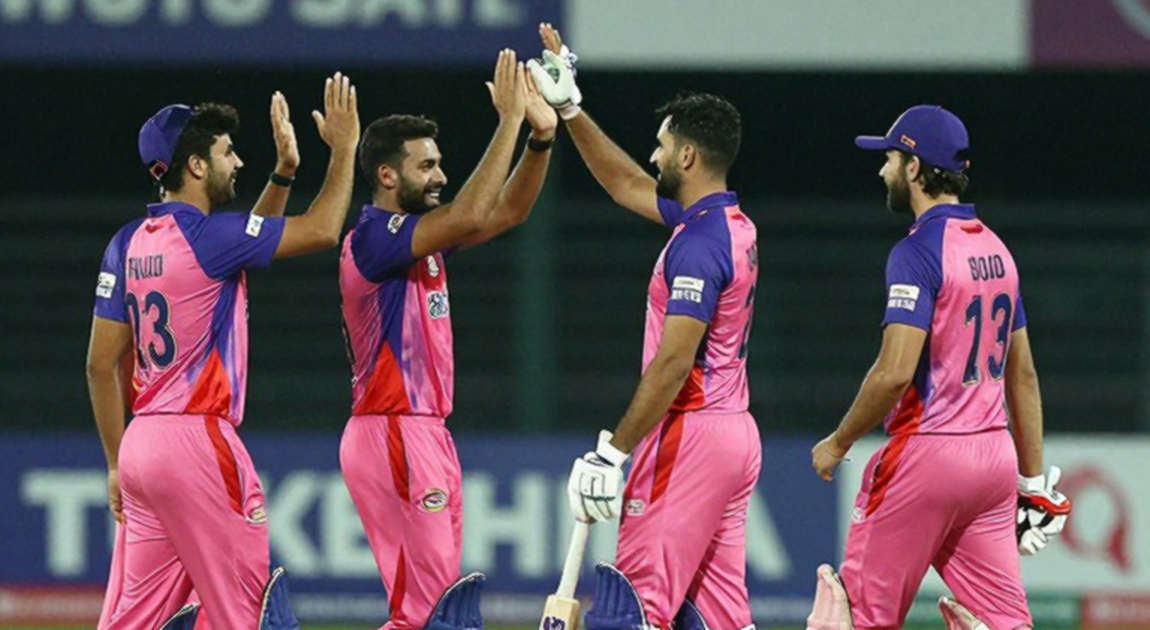
The other side says: this draw is not a strategy, it is an accident. Blocking 84 balls for 14 runs is not technique, anyone can defend. A real first-class batter would have made 40 or 50 and finished the game early. Baroda ran down the clock rather than saving wickets — and they only got the four-wicket cushion because Uttar Pradesh's field settings and bowling rotation ran out of ideas. Crediting Pithiya is consolation arithmetic.
That is a serious argument and it deserves to be quoted at full strength. It breaks in three places.
First: a batter who faces 84 balls does not merely eat deliveries, he buys breath for the man at the other end. Sheth was unbeaten on 40 — he was the one scoring. This is division of labour, not double defence. Had both blocked, there would have been no four wickets left to protect.
Second: 'anyone can defend' is a claim about a pitch I have not seen. Facing spin on a fourth-day surface with four men around the bat, surviving 84 balls is mentality as much as method. And I do not even know whether this session was day four or day five — that is absent from the source too. That empty box weakens my argument, and I will not hide it.
Third: the argument assumes fast scoring is risk-free. It is not. Batting quickly at 115/6 means 125/7. In first-class cricket a wicket is worth more than runs, and Baroda's arithmetic was correct.
But here I must file one more piece of evidence against my own thesis, and it is the most important. Baroda's survival and Pithiya's 84 balls are not causally linked by anything I hold. Correlation is not causation. Baroda might have survived because time was short, because rain arrived, because the pitch had gone flat, or because the declaration came late. I have data for none of it. What I have is this: four wickets did not fall, and 84 balls were bowled. Both are facts. The arrow between them is my inference, not my measurement.
One more thing on this thread: calling Uttar Pradesh an unsuccessful side would be the biggest lie available here. They were second in the table, 18 points from four matches, one point clear of the team they had just outplayed. The honest claim is narrower: their problem is not talent, it is conversion — and that needs several scorecards to prove, not one.
Takeaway: what to watch next
The schedule is hard — Madhya Pradesh, defending champions Jammu and Kashmir, and on 1-4 February at Nagpur, table leaders Vidarbha. That fixture is the real test of this analysis, because a 137-run cushion will not be on offer there.
I have set myself three signals and one kill condition.
One: Uttar Pradesh's wicket-conversion rate. Watch how many wickets they take in the final session after building a large lead. If the same pattern repeats across three matches, it is a tactical problem, not variance.
Two: Pithiya's dual utility. If, across his next three matches, he faces fewer than 30 balls per innings and stops repeating five-wicket hauls, my all-rounder-value thesis is dead. I am registering that now so I cannot rewrite it later. That habit is my error log — dated, back to October 2026, when a veteran in the Kolkata press box asked which 'feature desk' I was filing for and I answered with a shot map. The row had one woman in it; the dataset had none. That gap is something I have to weigh every week, not forget.
Three: Baroda's top order. Falling to 115/6 once is coincidence; twice is a pattern. If the top six keep collapsing and the lower order keeps rescuing them, that is not resilience. It is structural weakness.
And the wider lesson: a season in a bubble teaches you which numbers survive isolation and which were never real. In 2026, with empty stadiums, I tested exactly that with toss, dew and venue data. This Ranji match is the same question in a different format. A 492 total looks magnificent in isolation; in the points table it is worth three.
What this match gave me is not the name Mahesh Pithiya. It is the question — if a side can lead by 137, take six wickets, and still not win, are we measuring the wrong thing? Is control a metric, or a story big totals tell us? I do not have the answer. I have 84 balls.
Methodology and known errors (footnote)
Version v1.0, published with date. Source: available match report and scorecard summary; no independent official scorecard link supplied.
Derived figures (my own calculation): 309/541 = 3.43 runs per over; 14/84 = 16.67 strike rate; 42/17 = 2.47 economy; 112/5 = 22.4 runs per wicket; 104/5 = 20.8 runs per wicket; 376 of 492 = 76.4 percent from the top three (partnership and extras accounting make this an approximation, not an exact split).
Missing rows (what I could not measure): venue and pitch character; weather, light, dew; per-bowler over counts; declaration timing; overs remaining in the final session; the Ranji points system and this draw's exact table effect; player career averages and 12-month trends.
Known correction: the first draft of this analysis asserted 'strategic failure by Uttar Pradesh' at high confidence. With no overs-remaining data, I downgraded it to medium. That correction is public because the correction is the credibility.
Disclaimer: public-information sports analysis, not betting advice.