
U19 Asia Cup in Muscat: Six Days of Preparation, Two Wicketkeepers and a Large Field of Uncertainty
बीसीसीआई ने 30 अक्टूबर को ओमान के मस्कट में 5–14 नवंबर तक होने वाले एसीसी पुरुष अंडर-19 एशिया कप के लिए पंद्रह सदस्यीय भारतीय दल की घोषणा की; चयन जूनियर क्रिकेट कमेटी ने किया। लक्ष्य रायचंदानी कप्तान और यशबर्धन सिंह चौहान उपकप्तान हैं; दल में दो विशेषज्ञ विकेटकीपर अन्वय द्रविड़ और रजत बागेल शामिल हैं। भारत ग्रुप A में पाकिस्तान, संयुक्त अरब अमीरात और नेपाल के साथ है; ग्रुप B में बांग्लादेश, श्रीलंका, अफ़ग़ानिस्तान और मलेशिया हैं। ग्रुप मैच 5–11 नवंबर, सेमीफ़ाइनल 12 नवंबर और फ़ाइनल 14 नवंबर को हैं — भारत अधिकतम पाँच मैच खेलेगा और हर ग्रुप से शीर्ष दो टीमें आगे बढ़ेंगी, इसलिए भारत एक ग्रुप मैच हारकर भी ख़िताब जीत सकता है। मुख्य बातें: विज्ञप्ति में प्रति पारी ओवर संख्या, किसी खिलाड़ी की भूमिका, घरेलू राज्य, आंकड़े, सहयोगी स्टाफ, स्टैंड-बाय सूची, मैदान और मैच के शुरुआती समय — कुछ भी नहीं दिया गया; इसलिए तकनीकी और प्रदर्शन-आधारित आकलन इस समय संभव नहीं। मस्कट में नवंबर का मौसम शुष्क (28–32°C, कम बारिश) है, जिससे डीएलएस जोखिम कम है, पर दिन-रात के मैच होने पर ओस स्पिन को बेअसर कर सकती है और टॉस का महत्व बदल सकता है — शुरुआती समय अपुष्ट। घोषणा और टूर्नामेंट शुरू होने के बीच केवल छह दिन हैं और कोई पूर्व-टूर्नामेंट कैंप या अभ्यास मैच घोषित नहीं है। ऐतिहासिक रूप से भारत आईसीसी अंडर-19 विश्व कप में सबसे सफल टीम है (पाँच ख़िताब); आईसीसी अंडर-19 के लिए रैंकिंग प्रकाशित नहीं करता।
An Administrative Advisory, and the Space Around It
The Board of Control for Cricket in India announced its Under-19 squad on 30 October for the ACC Men's U19 Asia Cup, to be played in Muscat, Oman, from 5 to 14 November. The selection was made by the Junior Cricket Committee. The squad contains fifteen players, including two specialist wicketkeepers. Lakshya Raichandani has been named captain and Yashbardhan Singh Chauhan vice-captain. The two wicketkeepers are Anvay Dravid and Rajat Baghel. The advisory names both a captain and a vice-captain — not unusual for a fifteen-man squad, but a signal worth reading, as discussed below.
That is what the document contains. A large part of this report is about what it does not contain, and that is deliberate. The release carries no batting average, strike rate, bowling average or economy rate for any player; no state affiliation, no first-class or List A experience, no recent form, no fitness or injury status. It does not state any player's role — opener, middle order, seamer, spinner, all-rounder. It names no support staff, no stand-bys, no venues and no start times. It does not state how many overs per innings the tournament will be played over.
This does not mean those things do not exist. It means the document is an administrative advisory, not a detailed briefing. The journalistic rule is simple: what is not stated should be treated as not stated, and should not be filled in with inference. Every judgement below is therefore tagged, and where information is absent the words used are 'insufficient information, cannot assess' rather than a well-turned sentence.
Six Days: The Most Important Fact in the Document
If one fact is to be retained from this release, it is the date. The advisory was issued on 30 October; the tournament begins on 5 November. Six days. In that window no pre-tournament camp, no warm-up fixture, no travel schedule and no arrival date in Muscat has been announced. [Confidence: Medium]
This matters more for an Under-19 side because players arrive from different state units, and nothing in the release demonstrates that they have played together on a common platform. In six days, travel, rest, training and adaptation to local conditions all compress. For professional teams this is not unusual; but at Under-19 level, where training cycles and collective practice are themselves a variable, it is a genuine operational constraint. [Confidence: Medium]
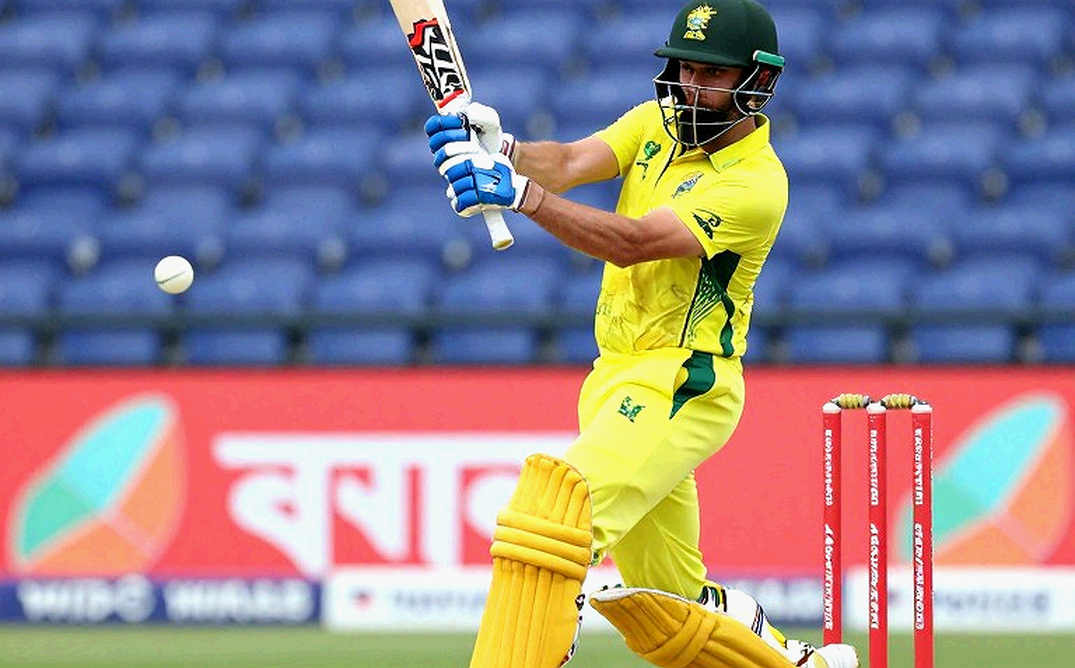
One distinction must be held clearly: 'not disclosed' is not the same as 'did not happen'. The board may well have held a camp internally without publicising it. What can be said publicly is that no documentary evidence of that preparation is available — and that is what the reader is entitled to know, no more.
Format: Not Stated, But the Signals Point to Fifty Overs
The release nowhere states whether matches will be fifty overs or twenty. Historical precedent indicates that the ACC U19 Asia Cup has traditionally been a fifty-over competition, and a schedule of two groups of four plus semi-finals and a final inside ten days is consistent with a fifty-over format. [Confidence: Medium — confirmation against ACC playing conditions pending]
The assumption matters because the entire tactical discussion rests on it. If the format is fifty overs, a match divides into three phases: the Powerplay (overs 1–10, two fielders outside the circle), the middle overs (11–40, where spin control and rotation are decisive), and the death overs (41–50, where acceleration and yorker execution matter). But there is no data on how this specific squad has performed in any of those three phases. [Insufficient information, cannot assess]
And if the format turns out to be twenty overs, the entire framework above collapses. That is the core problem of this situation: the shape of the tournament is unconfirmed before any judgement about the team can be made.
Structure: A Maximum of Five Matches for India
The arithmetic is simple. Two groups of four. Each side plays three group matches — twelve in all, between 5 and 11 November. The top two from each group reach the semi-finals, on 12 November; the final is on 14 November. [Confidence: High — dates and group composition are stated in the release]
India will therefore play a maximum of five matches and a minimum of three. The team's entire tournament will be evaluated on a very thin sample of five matches — a limitation of age-group cricket, not a weakness of any player or side.
A second, more practical conclusion follows: because two of four teams advance, India can lose one group match and still win the tournament. This separates the group stage's sporting significance from its narrative significance. The reaction to the Pakistan fixture, especially on social media, will be loud relative to the result's actual bearing on the tournament — and a reader is better served understanding that difference in advance than afterwards. [Confidence: Medium]
Group A: Risk Concentrated in Two Matches
Group A contains India, Pakistan, UAE and Nepal. Group B contains Bangladesh, Sri Lanka, Afghanistan and Malaysia. [Confidence: High]
India's competitive risk is not spread across five matches but concentrated in two: the group fixture against Pakistan, which likely decides top spot and therefore the semi-final opponent from Group B, and the single-elimination semi-final. The group stage is structurally forgiving; the tournament's real variance sits in a knockout of roughly a hundred overs. [Confidence: Medium]
One asymmetry is worth noting. Group A is harder than Group B in a specific respect: it contains the fixture with the heaviest emotional and media load (Pakistan) plus the two most awkward sub-elite matchups. Nepal is an Associate with a genuine age-group spin-bowling culture; UAE will be the most Gulf-conditioned side in the tournament. Group B contains the weakest entrant (Malaysia) but three strong sides — India simply does not have to play them until the knockout.
Pakistan: The Match Whose Result Does Not Follow Senior Hierarchy
The Pakistan fixture will shape the group and carry the heaviest non-sporting load. At age-group level, India–Pakistan results have historically been volatile and correlate poorly with senior-level hierarchy. The two boards' junior pathways are organised very differently, and Pakistan's junior sides have repeatedly produced results that senior-level expectations would not predict. [Confidence: Medium]
One warning is necessary here: presenting the result of this match as a 'sign of things to come' is an old and frequently wrong habit. At fifteen to eighteen, one day's performance is not a forecast of the next five years, and drawing conclusions about either nation's cricket future from this fixture would be statistically improper.
UAE: The Group's Only Conditions Specialist
UAE are the one side with a home-adjacent advantage. A team resident in the Gulf and raised on Gulf surfaces will not find Muscat unfamiliar. For the other seven sides the venue is neutral, and that neutrality is symmetric — except for UAE. [Confidence: Medium]
The direct implication is that India's normal talent gap over UAE narrows somewhat here. Gulf venues have repeatedly produced uncomfortably close matches between Full Members and UAE at age-group level. This is not an Indian weakness; it is the arithmetic of conditions.
Nepal: The Group's Highest-Variance Associate
Treating Nepal as an easy match would be the most common mistake in this group. Nepal's cricket culture is spin-heavy and its age-group sides have a track record of raising performance against Full Member sides. [Confidence: Medium]
If the Muscat surface proves slow and spin-friendly, the Nepal fixture could become India's most technically awkward group match — even though on paper it looks the easiest.
Group B: What the Knockout May Bring
Group B comprises Bangladesh, Sri Lanka, Afghanistan and Malaysia. None of them stands between India and the semi-finals, which is a structural relief.
As potential knockout opponents, however, they matter a great deal. Afghanistan's junior strength is spin; Bangladesh's Under-19 sides have been consistently strong; Sri Lanka's age-group teams benefit from a well-established domestic structure. And here the release's most consequential omission surfaces: the bowling type of none of the fifteen players is stated. Gulf surfaces reward spin; whether India have selected accordingly has no answer in the document. [Insufficient information — this is the single most consequential unstated variable]
Muscat's Surface, November Weather and the Unanswered Question of Dew
Omani grounds typically produce hard, dry, low-bounce surfaces where the ball stops in the pitch early and grip and spin increase through the afternoon. This is not in the source; it is inference from the regional venue profile. [Confidence: Medium]
The weather picture is clear: November in Oman is climatologically dry (post-monsoon), daytime highs around 28–32°C, low rain probability. The direct consequence is that the risk of Duckworth-Lewis-Stern disruption is low — the calmest variable in this tournament. [Confidence: Medium]
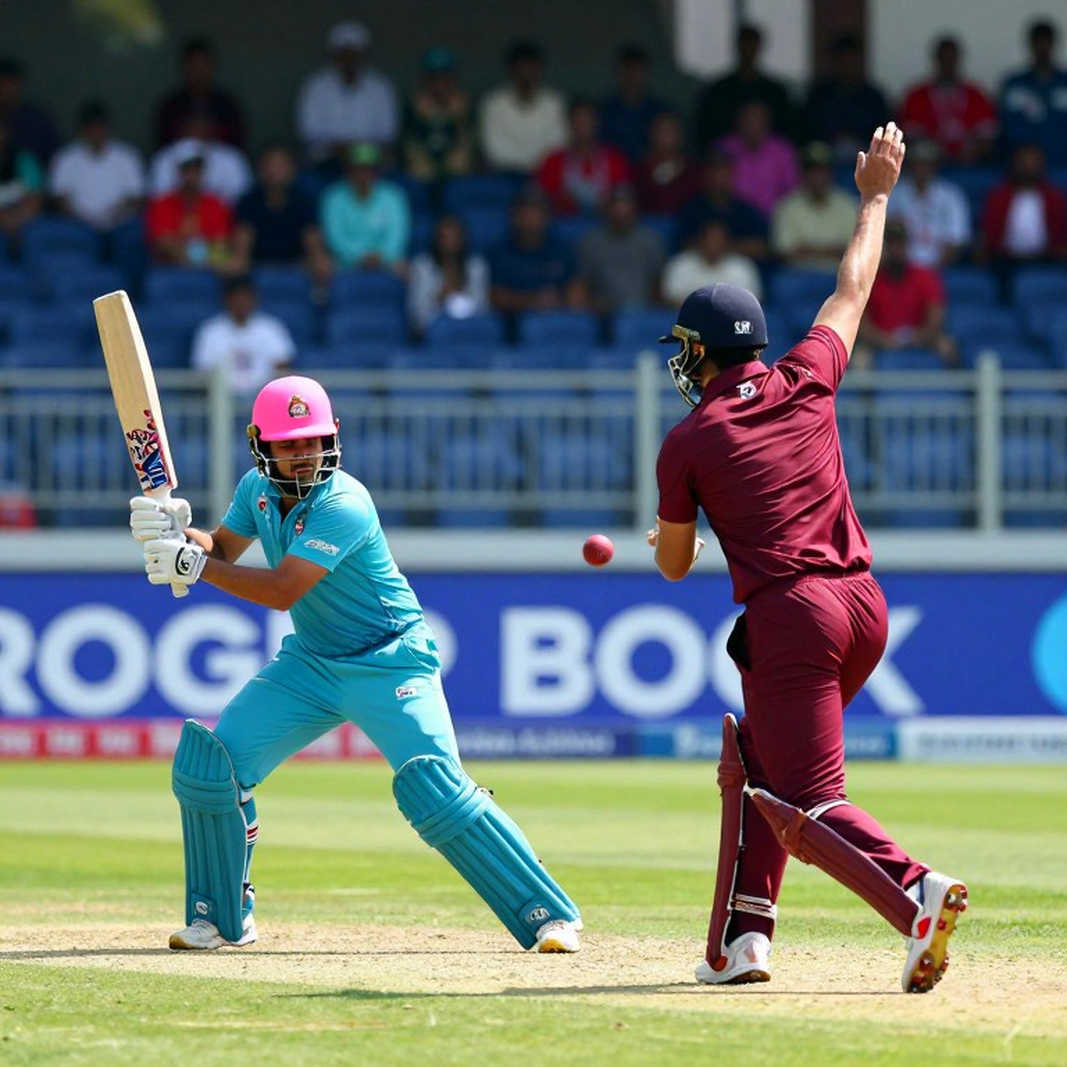
Dew, however, remains open. Dew only matters if matches are day-night, and the release does not state start times. [Insufficient information]
The significance of this uncertainty is that the toss inverts in the two scenarios. If matches are day-night, evening dew substantially neutralises spin and makes chasing easier — a large advantage to the side winning the toss. If matches are day games, the opposite holds and the side batting first on a drying surface gains. The whole argument rests on an unanswered question, and any analyst who fills that gap by inference is misleading the reader. [Confidence: Low — contingent on unknown start times]
One further absence should be recorded: nothing in the document indicates whether DRS will be available at this level. DRS is typically not deployed at age-group ACC events — but that is unconfirmed and no conclusion should be built on it.
Knockout Variance, and the Limited Role of Net Run Rate
A subtle consequence of Group A's composition is that net run rate management is unlikely to be decisive for India. With two of four advancing, one heavy win — most plausibly against the weakest side in the group — would settle it. That reduces the incentive to risk players chasing a fast net run rate. [Confidence: Medium]
The point is small but real: in low-stakes group matches, a captain and coach can afford to test young players in different roles, which is appropriate for the development purpose of Under-19 cricket.
The Squad: Why Two Wicketkeepers
Two specialist wicketkeepers in fifteen (Anvay Dravid and Rajat Baghel) is standard construction. It implies either that one will take the gloves while the other is picked primarily as a batter, or that the selectors want a genuine contest for the position through the group stage. [Confidence: Medium]
There is a practical dimension that should not be ignored: in a tournament of at most five matches, two wicketkeepers means at least one of them will spend most of it on the bench. At a development age that is a deliberate trade-off — selectors have prioritised a genuine second keeping option over an extra seam-bowling body. [Confidence: Medium]
Captain and Vice-Captain: A Signal, Not Proof of Performance
Formally naming both a captain and a vice-captain in a fifteen-man squad is a leadership-pipeline signal more than a tactical one. At age-group level, dual leadership designations usually indicate the board is tracking two players across a multi-year cycle — Asia Cup, then the next Under-19 World Cup — rather than merely covering one match. [Confidence: Medium]
Lakshya Raichandani's captaincy is the strongest available proxy for selectorial confidence in this squad. In BCCI junior selection practice the captain is normally a player with an established domestic age-group record and, frequently, a top-order batting or frontline-bowling role. But the release states no role, no state and no record — so the inference cannot be verified and must not be treated as a performance judgement. [Confidence: Low on role; Medium on the selectorial-confidence reading]
A line must be drawn here. The newsworthy fact is that Raichandani has been handed the leadership, not how good a player he is — because no evidence for the latter is currently available to anyone.
A Complete Absence of Data, and What It Does to Coverage
The most distinctive feature of this release is that no player is given a statistical headline. No 'scored X in the Vinoo Mankad Trophy', no 'took N wickets'. That is characteristic of a bare administrative advisory, but it has a concrete consequence: there is no data-based basis for ranking any of the fifteen against each other. Any public ranking or 'top five prospects' list appearing in the next fortnight will be reputation- or surname-derived rather than performance-derived. That is a structural feature of this information environment, not a criticism of the squad.
The effect on coverage is direct. When performance data is absent, coverage goes where data is easy — to a familiar surname. It is a known pattern and a predictable one. It has no bearing on the player's ability.
The Surname Effect: An Observation About the Information Environment
This is a sensitive point and must be handled carefully, because it has nothing to do with any player's performance and should not be presented as a performance assessment.
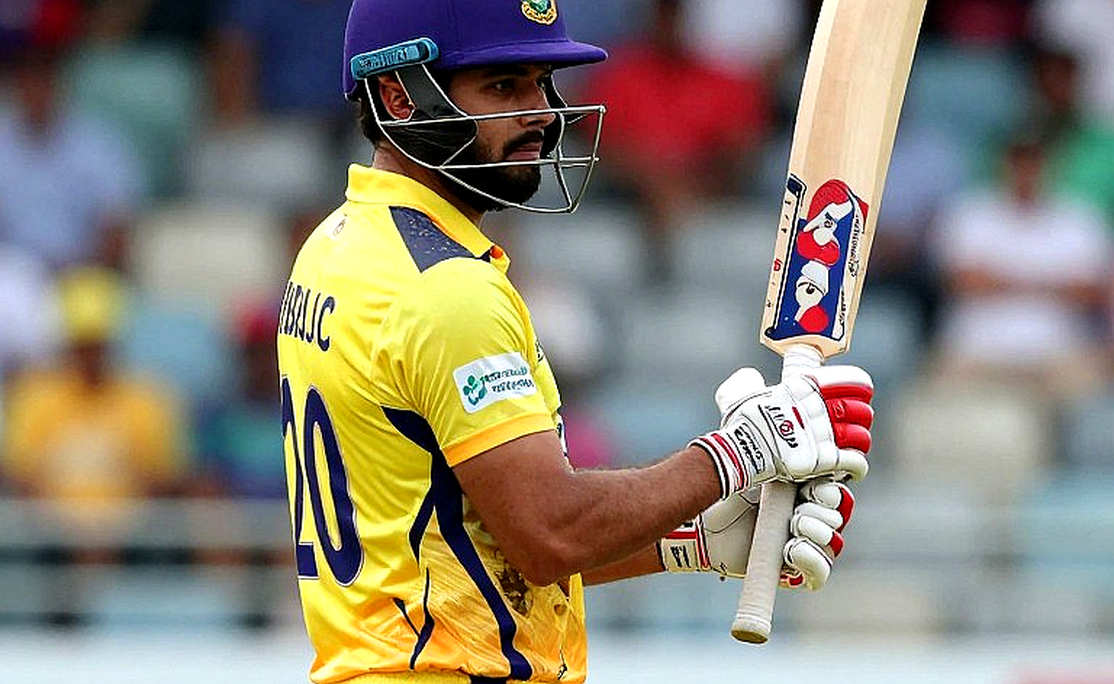
Among fifteen players, one wicketkeeper carries a surname that instantly creates a familiar image in Indian cricket. Public attention — especially on social media — will attach to the name before it attaches to the record. [Confidence: Medium — an inference about the information environment]
This is a structural asymmetry. On one side, it is not easy for that player: being 'someone's relative' invites a different set of expectations, and at Under-19 level that weight multiplies. On the other side, the remaining thirteen or fourteen members of the squad will not receive attention at the same rate — the same asymmetry, viewed from its other end.
What can be said is only this: the squad announcement disclosed no statistical fact in favour of any player that would establish a ranking. That applies equally to all fifteen, without exception.
The Age Curve: Sixteen to Nineteen, and the Limits of Prediction
Between sixteen and nineteen, year-on-year physical and technical change is the dominant variable. A single five-match tournament result has very low predictive power for senior international outcomes, and the historical conversion rate from Under-19 Asia Cup squads to full India caps is low — the majority of any given Under-19 cohort does not reach senior international cricket. [Confidence: Medium — general industry observation; cohort-specific data pending verification]
This is context, not cynicism. It means that declaring a player 'the next big thing' after five good matches is premature, and writing one off after five poor ones is unjust.
Conversely, an important point: these players are at the start of the curve, which means high volatility in both directions. This is the period when the scope for improvement is greatest and the scope for regression is nearly as large.
India's Junior Standing: A Strong Pipeline, Conclusions Still Cautious
The ICC does not publish rankings for Under-19 cricket, so no ranking-based positioning is possible. [Insufficient information]
What is available is historical standing: India is the most successful side in the history of the ICC Under-19 Men's Cricket World Cup, with five titles — the clearest available proxy for the strength of its junior pipeline. [Confidence: High — universally recognised record] Specific ACC U19 Asia Cup title counts are pending verification and are not cited here.
On venue, this is an entirely neutral tournament for India. The absence of home advantage is symmetric for seven of eight teams; UAE are the only exception. That marginally narrows India's usual talent gap over UAE — and no more than that.
What Was Not Disclosed: Support Staff, Stand-Bys, Venues, Start Times
BCCI touring advisories normally name support staff — head coach, bowling coach, physio, trainer, manager. Not one is named here, which is atypical at this level. [Confidence: Medium]
The practical implication is that there is no basis for assessing coaching continuity or the technical programme these players are entering. Nor can anyone say whether the staff has changed from the previous squad.
The second major absence is a stand-by list. BCCI junior releases frequently name two to four stand-bys. Their absence here either reflects a change in disclosure practice or an incomplete advisory. If genuine, it removes a documented replacement pathway should a player be injured in Muscat. [Confidence: Medium]
The third absence: venue names and start times. Twelve group matches across roughly eleven group-stage days strongly suggests multiple fixtures per day and therefore, in all likelihood, more than one ground. The advisory names neither. [Confidence: Medium]
The fourth, and one that must be mentioned: no fitness or injury history for any player. The squad's actual availability therefore cannot be assessed.
Risk Flags: This Analysis's Own Limits
An analysis is more trustworthy when it declares its own limits. Here they are.
First, format uncertainty runs through the entire report. Overs are not given, so every discussion of Powerplay, middle overs and death overs is conditional. Second, the sample size is severely limited — at most five matches, an extremely thin basis for any judgement about any player. Third, 'home-ground bias' applies here in inverted form: all teams are away except UAE. Fourth, luck factors such as the toss and DLS could not be fully stripped out — DLS risk in Oman in November is low, but the toss effect is unconfirmed. Fifth, there is no indication of DRS at this level, and that too is unconfirmed.
With those limits stated, one thing is clear: everything marked as inference in this report is marked as inference, and where data is absent the words used are 'cannot assess' rather than a polished sentence.
Five Concrete Things to Watch
First, confirmation of format. Once the ACC playing conditions are public, it will be settled whether matches are fifty overs or twenty — until then, every tactical comment should be treated as conditional.
Second, match start times. Once known, the entire toss-and-dew debate resolves in one direction, and this is the largest publicly unavailable variable affecting outcomes.
Third, the bowling combination. The first playing XI will reveal how much spin India have prepared for Gulf surfaces — the most meaningful of this release's blank spaces.
Fourth, the support staff and stand-by list. If the board releases it later, it will be a direct correction of this advisory's incompleteness; if not, it is a permanent disclosure gap worth recording.
Fifth, and most importantly, scepticism towards coverage that presents the Pakistan result as a 'sign'. Losing one group match does not conflict mathematically with winning the tournament. A side playing under a two-of-four rule faces its real examination on 12 and 14 November.
In Closing
This squad travels to Muscat with fifteen names, two leadership designations, two wicketkeepers and a six-day preparation window. Everything solid that can be said about it is structural: the group stage is forgiving, the knockout is not; the competitive focus is Pakistan and the semi-final; the weather is calm but the dew question is unanswered; and the team's technical composition — bowling mix, batting order, roles — is entirely unconfirmed.
Whichever players shine across those five matches will be written about extensively over the following fortnight. Much of that writing does not exist in this release — not in the statistics, not in the roles, not in the support staff. A reader is entitled to know that, and saying so is this report's job.