
Abhishek Sharma's Wellington Storm: 113-Run Spark, But the Flat-Track Debate Isn't Over
अभिषेक शर्मा ने वेलिंगटन (भारत के बाहर) में 38 गेंदों में 113 रन बनाए, स्ट्राइक रेट करीब 297 — जिसमें 9 चौके और 11 छक्के शामिल थे। उनके 90.3% रन बाउंड्री से आए, जो असाधारण लेकिन उच्च-विचलन वाला स्कोरिंग पैटर्न है। यह पारी 'फ्लैट-ट्रैक बुली' आलोचना का सबूत-आधारित जवाब नहीं देती क्योंकि पिच रिपोर्ट, टॉस, मैच परिणाम और विपक्षी गेंदबाज़ी की गुणवत्ता सार्वजनिक नहीं है। उन्होंने ICC T20I बल्लेबाज़ी रैंकिंग में नंबर वन हासिल किया, लेकिन यह भारित प्रणाली हालिया फ़ॉर्म को दर्शाती है, दीर्घकालिक प्रभुत्व को नहीं। 26 साल की उम्र में उनके पास शून्य ODI और शून्य टेस्ट कैप हैं — एक फ़ॉर्मैट-विशेषज्ञ प्रोफ़ाइल। करियर आंकड़े (71 T20I, औसत 33.33, स्ट्राइक रेट 196, 4 शतक) को ICC/ESPNcricinfo से स्वतंत्र सत्यापन की ज़रूरत है, क्योंकि 196 का स्ट्राइक रेट हालिया-विंडो का भी हो सकता है। भारत की टॉप-ऑर्डर प्रतिस्पर्धा (संजू सैमसन, वैभव सूर्यवंशी) चयन-जोखिम पैदा करती है। वाणिज्यिक मूल्य (एंडोर्समेंट वृद्धि) खेल-सत्यापन से आगे चल रहा है। कोई सत्यनिष्ठा, शासन या वित्तीय जोखिम संकेत नहीं है।
Wellington. In Indian cricket, one innings can sometimes change a player's life. And sometimes one innings gets more weight than it deserves. Abhishek Sharma's 113 off 38 balls — a strike rate touching 297 — belongs to the second category. The question isn't whether the innings was good. The question is whether one innings is enough to crown someone the 'new idol'.
The innings was extraordinary by any measure. Nine fours and 11 sixes in 38 balls — 20 boundary deliveries, or 52.6% of the balls he faced. Boundaries accounted for 90.3% of his runs (102 of 113). This is the purest form of T20 powerplay maximisation: low rotation, high risk, and total destruction when the day is right. But the same statistic carries a warning.
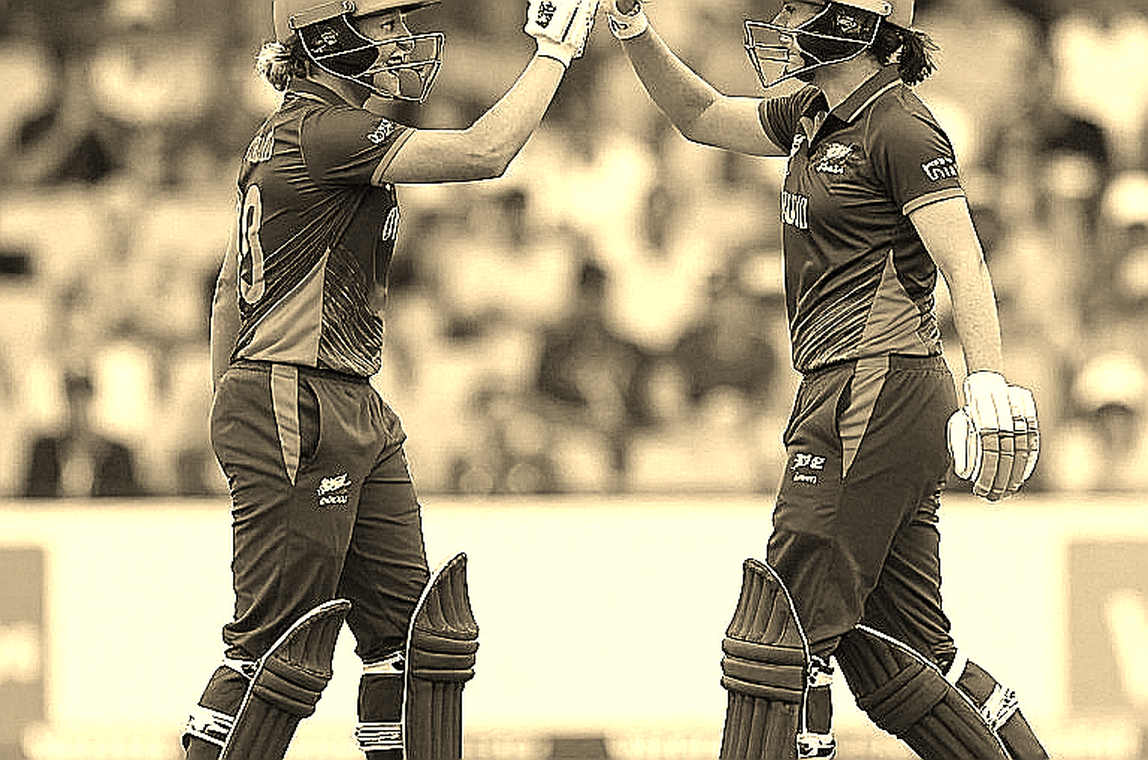
Boundary dependency: strength and risk in one
On the 18 non-boundary balls he faced, Abhishek scored just 11 runs at a strike rate around 61. That is the part of the picture that hype usually skips. Scoring over 90% of runs in boundaries is exceptional in T20, but it is also the method that breaks first when conditions change. If the pitch is slow, if the ball doesn't come on, or if the bowling plan mixes yorkers and slower balls well, there is no secondary scoring mechanism visible. That is the real technical foundation of the 'flat-track bully' charge — and this innings has not closed it, only postponed it.
The Wellington context: what the piece doesn't say
Here is a critical point that a fair analysis should have underlined — this is an away innings. In New Zealand, where wind is a structural variable and early seam movement is common. If the pitch assisted seam or swing, the innings becomes a direct rebuttal to the flat-track charge. If it was flat, the innings reinforces it. But we have no pitch report, no comparative scoring rate, no match result, no toss. Even the venue isn't confirmed — Basin Reserve or Sky Stadium? This is an information gap, and narratives grow in exactly such gaps.
The bowling attack's quality is also unstated. Was it a full-strength New Zealand attack or a rotation? T20 variance is enormous — one flat pitch, one wrong bowling plan, one dropped catch, and you have an outlier score. Before treating this innings as settled truth, these questions need answers.
The hundred's pace and the record claim
The piece quotes Yuvraj Singh — 'I cannot score a century in 30 or 34 balls.' That implies Abhishek's hundred came in roughly 30-34 balls, placing it near the fastest men's T20I centuries in history. But the piece never states the ball count for the hundred, only the innings total. That is an editorial omission, because a stated ball count for the century would have proven the innings' historical weight without argument.
The article's structure also reads like a standard wire report — AFP quotes, former-player reactions, and a career summary. That suggests rapid assembly rather than research. It doesn't reduce the innings' significance, but it should temper the weight given to its claims.
Career data: waiting for verification
The career figures given are 71 T20s, 2,267 runs, average 33.33, strike rate 196, four centuries. One figure is internally consistent — a 196 strike rate alongside an average of 33.33 implies roughly 1,157 balls faced and 68 dismissals. But 71 T20I caps at 26 with zero ODI or Test appearances is an unusually high count. It's plausible that the figure conflates T20I-only data with broader T20 career data, or that 196 is a recent-window strike rate rather than a career rate.
The distinction matters enormously. If 196 is a recent-window figure, the 'sustained dominance' reading falls apart. Independent verification against ICC and ESPNcricinfo records is required — and that is the reader's burden, because the article doesn't do it.
Even if the numbers are correct, one foundational fact remains: Abhishek has zero ODI and Test caps. That is the article's most important fact, and it's mentioned only in passing. It means every data point is confined to the format with the shortest feedback loop and the widest variance.
What 'No. 1' actually means
Abhishek has regained the No. 1 spot in the ICC T20I batting rankings. That is an achievement, but a serious technical point needs stating — the ICC ranking is a weighted system that emphasises recent performance and adjusts for opposition strength. A single strong series can therefore lift a player to the top without years of consistency. The ranking is evidence of recent form, not of sustained dominance.
The article quotes Sharda Ugra saying Abhishek has drawn attention 'not only with explosive batting but also with consistency'. But there is no consistency metric in the piece — no rolling 12-month split, no home/away split, no split by surface. Rankings and consistency are not synonyms.
The technical claim: testimony, not data
The article's technical differentiator — 'calculated risk, not slogging' — rests entirely on expert assertion. Salman Butt's statement that Abhishek fuses 'precision with aggression' is a valid observation, but it isn't data. Verifying it would require a dismissal-mode distribution (how often is he bowled or LBW playing across the line versus caught in the deep) and a scoring split by delivery type (short ball, full ball, spin, left-arm pace). The article supplies none of this.
A related source-grading point deserves clarity: Salman Butt is a former Pakistan captain whose career ended in the 2026 spot-fixing case. His technical opinion is legitimate commentary, but when a piece leans on a small number of expert voices, their institutional weight becomes a relevant source-grading factor. This is a comment on sourcing, not on the accuracy of his specific technical point.
India's batting queue: a surplus market
In a team where the world's No. 1 ranked batter is described as fighting for his place, the constraint is selection policy, not talent supply. Sanju Samson and Vaibhav Suryavanshi are named as competitors. That means an international-calibre queue for the same slots, and any individual's hot streak has structurally limited value.
The article's most analytically revealing sentence is Ugra's — 'everyone thought Vaibhav was going to be the next superstar, but Abhishek came and snatched that place.' That describes the Indian star-making system's actual mechanics: there is one superstar seat, and the occupant is determined by recency, not career accumulation. That is a media-market observation more than a cricketing one.
The twilight of Rohit Sharma and Virat Kohli is mentioned. Directionally correct — a generational handover window is open. But whether Abhishek is the designated successor is not established by one innings and a ranking. 'He broke down the door' is a narrative device, not a selection fact.
The ODI and Test pathway: unresolved
No ODI or Test cap at 26 is unusual on one hand and a product of Indian selection psychology on the other. The piece quotes Mohammad Kaif publicly demanding an ODI chance. That establishes an open debate, not a settled matter.
Two possibilities exist, both logical. First, the team management has decided his game doesn't currently translate to 50-over tempo. Second, the ODI top order is simply full. In neither case is the player at fault, but the risk is identical: in the first, format specialisation becomes permanent; in the second, time passes. Age 26 is the entry point of the typical batting peak (27-33). If the technical base is real, the next 5-6 years are the maximum-output window — but that window is only valuable for as long as selection policy permits.
IPL and the commercial ecosystem
The Delhi Capitals to Sunrisers Hyderabad move is presented as a redemption arc. The piece says he 'found his true identity' at SRH. But without any numerical comparison — no pre/post-move strike rate, no averages — this is narrative attribution, not measurable fact.
The point the piece misses is the Travis Head opening partnership. This is the article's most transferable strategic insight. If the pair genuinely 'decide the fate of the match in the first six overs', Abhishek's actual value is powerplay run-rate inflation — a real, quantifiable, highly prized T20 skill. But that is a role value, not a format-transcending value. And it must be remembered that IPL conditions — flat surfaces, short boundaries, franchise-optimised roles — are systematically more batting-friendly than away T20I conditions. That is precisely how flat-track reputations get made.
On the commercial side, the piece is explicit — 'signing deals with one organization after another', 'one of the most marketable faces among India's new-generation cricketers.' This growth is visible in brand announcements, not scoreboards, which is its only verifiable metric. But no endorsement value, no IPL auction price, no retention status is available. Any 'premium' claim would be speculation and is withheld here.
One telling line the article itself offers, and in doing so reveals its weakness — 'his real identity remains his bat, not off-field glamour.' That sentence is only written when the opposite trend is visible.
The risk picture
The biggest and most under-reported risk is not performance but career shape. Being the world's best at one format while uncapped in the other two at 26 is a stable outcome only if the format landscape stays as it is. It won't. ODI World Cups and WTC cycles will continue to define legacy and central-contract value. BCCI's central-contract grading rewards multi-format performance — a T20I-only specialist sits structurally lower, regardless of ranking.
The second risk is hype-backlash. 'Arrival music of a new star', 'India's new cricket idol' — and the Gavaskar-Tendulkar-Kohli-Rohit lineage construction. That is the most loaded comparison framework in Indian cricket, and its historical fulfilment rate is extremely low. The article invokes it fully, without hedging.
The third is selection displacement. Samson and Suryavanshi's pressure is real. There is an irony any planner should note: Abhishek himself arrived by taking Vaibhav's 'superstar seat.' The same system that can lift him can drop him — because it runs on recency, not accumulation.
There is not a single integrity, governance, or financial risk signal in this article — this should be stated plainly. No fixing signal, no odds anomaly, no eligibility dispute, no DRS/DLS controversy. It is a performance-profile piece and should be read as one.
The most credible voice made the most modest claim
The most reliable assessment in the piece is Daryl Mitchell's — 'some of his shots were world-class… well played.' That is a specific, bounded, in-the-moment evaluation. Versus Ugra's 'new-generation superstar' and the author's 'broke down the door' — both unbounded. The article's most solid point is its smallest claim, and its weakest point is its largest.
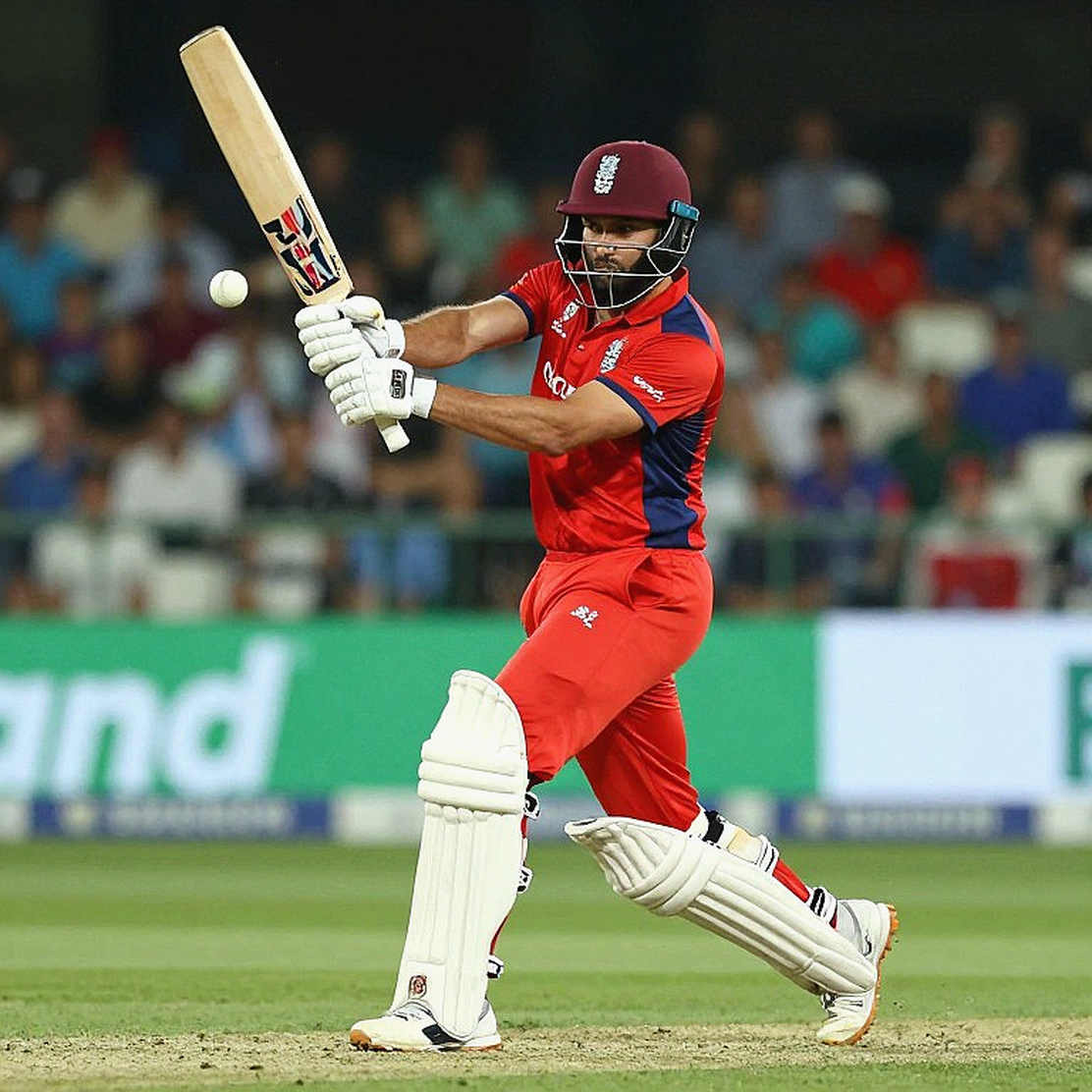
There is one more editorial gap. This piece is built around a criticism — flat-track bully — yet quotes not a single dissent or critical voice. The critics are unnamed, only referred to as 'critics'. A balanced treatment would have re-interviewed them or cited the technical basis of the criticism. The article asserts narrative victory without demonstrating it.
Pipeline: the article's most durable contribution
From a supply-chain view, the most useful information is the Yuvraj Singh mentorship, the 2026 U19 World Cup title (under Rahul Dravid) with Abhishek in the squad, and the Punjab domestic pathway. A former elite left-handed all-rounder shaping a left-handed power-hitter through the COVID lockdown is a replicable development model. If mentorship-plus-IPL-scouting becomes a recognised development channel, its half-life will be far longer than one innings.
But a structural asymmetry is also visible. India's dominance of the cricket market is so great that a domestic star's emergence has asymmetric global effects — subcontinental engagement rises disproportionately while impact on English or Australian domestic consumption is negligible. The article's claim that he 'created a batting style very difficult to compete with worldwide' overstates the global transmission.
Conclusion: what the innings proved, and what it didn't
The Wellington innings is real, extraordinary, and away from home — a genuine point in his favour the article doesn't sufficiently highlight. The No. 1 ranking is a real (if form-weighted) marker. What is missing is multi-innings, multi-condition, multi-format support.
Here is what the article doesn't say: the real story is not 'he answered his critics.' The real story is — India has produced a world-class T20 powerplay asset whose multi-format future is entirely unresolved, and whose commercial value is being priced ahead of that resolution.
This is not a criticism of the player. It is a criticism of the narrative woven around him so quickly. What he has at 26 is scarce — a left-handed, Indian, powerplay-destroying opener is the thinnest talent category in world T20 cricket, and scarcity — not just performance — drives selection security and commercial value.
But scarcity and proven dominance are not the same thing. The debate is not 'over' — it is postponed. The full verdict is down to the next 3-5 innings, across multiple surfaces, seasons and opponents.
Until then, 'name of fear' is a claim, not a verified fact. For a good sports reader, that distinction matters most.
Signals to watch
• The next 3-5 T20I innings, especially on seam-friendly surfaces • Any ODI debut or public selection signal • Non-boundary strike rate (does it hold structurally below 90 across a series?) • A slip in ICC ranking that would weaken the headline claim • Samson and Suryavanshi's selection status • Brand growth vs on-field output — if brand rises through a form dip, that signals commercial overheating
This analysis is based on public information and is for sports-information reference only. It is not betting advice or a win/loss prediction. Sporting outcomes are highly uncertain, and the career statistics quoted in the article should be read with verification flags.