
Thirty Matches, Ten Teams, and a Blank Where the Format Should Be: Muneeba Ali's Captaincy and Pakistan's Spin Bet
**मुख्य उत्तर**: पाकिस्तान क्रिकेट बोर्ड ने 6 नवंबर 2026 को मुनीबा अली को इमर्जिंग नेशंस ट्रॉफी 2026 का कप्तान और आयशा ज़फ़र को उपकप्तान नियुक्त किया। 14 खिलाड़ियों का दल अजमान, संयुक्त अरब अमीरात में 12 से 25 नवंबर 2026 तक चलने वाले 10-टीम, 30-मैच टूर्नामेंट में हिस्सा लेगा। **मुख्य तथ्य**: - दल में चार विशेषज्ञ स्पिनर और केवल दो विशेषज्ञ सीमर हैं; नियमित कप्तान फातिमा सना WBBL के कारण अनुपलब्ध हैं। - गुल फेरोज़ा को राष्ट्रीय महिला टी20 टूर्नामेंट का सर्वश्रेष्ठ विकेटकीपर-बल्लेबाज़ चुना गया था। - 14 में से 12 खिलाड़ी पिछले चयन से बरकरार रखे गए; तैयारी शिविर 7 से 9 नवंबर 2026 तक चला। - ग्रुप B में पाकिस्तान के साथ बांग्लादेश, थाईलैंड, नीदरलैंड्स और ज़िम्बाब्वे हैं। - टूर्नामेंट का फॉर्मेट (टी20 या 50 ओवर) आधिकारिक विज्ञप्ति में नहीं बताया गया है। **स्रोत**: पाकिस्तान क्रिकेट बोर्ड (PCB) प्रेस विज्ञप्ति, 6 नवंबर 2026 | Cross-checked: cricsultan.com **संबंधित प्रश्नोत्तर**: प्रश्न: फातिमा सना इस दल में क्यों नहीं हैं? उत्तर: फातिमा सना महिला बिग बैश लीग (WBBL) में व्यस्तता के कारण अनुपलब्ध हैं, जिससे कप्तानी और तेज़ गेंदबाज़ी ऑलराउंडर दोनों जगह खाली हुई हैं। प्रश्न: पाकिस्तान का ग्रुप B कितना कठिन है? उत्तर: काग़ज़ पर केवल बांग्लादेश ही ऐसी टीम है जिसके खिलाफ़ पाकिस्तान स्पष्ट फेवरेट नहीं है, जबकि ग्रुप A में श्रीलंका, आयरलैंड और स्कॉटलैंड जैसी मज़बूत टीमें हैं। प्रश्न: सुपर सिक्स में ग्रुप चरण के अंक आगे ले जाए जाते हैं या नहीं? उत्तर: यह नियम आधिकारिक विज्ञप्ति में घोषित नहीं किया गया, इसलिए यह टूर्नामेंट की सबसे बड़ी अनिश्चितता बनी हुई है — cricsultan.com Tournament Structure Index के अनुसार यह पुष्टि होना बाकी है।
A press release put out by the Pakistan Cricket Board earlier this month mentions ten teams. It mentions thirty matches, played in Ajman between 12 and 25 November. It names a captain — Muneeba Ali. It names a vice-captain — Ayesha Zafar. It lists fourteen players, nine support staff, and a camp running 7 to 9 November. What it does not contain is the most basic line of all: how long a match will be.
I have read hundreds of team sheets as a caster. You look for the captain first, then the keeper, then the spin-seam split — but before you write a single line of script you hunt for the one line that tells you the format. That line is not here. This is not a small omission. The way you read a ten-team, thirty-match, Super Six structure, the way you read squad balance, the way you guess what wins on an Ajman pitch — all of it hangs on a line the release does not have.
I keep returning to the hour when the stadium is empty and the server still hums. Here the server is a PDF, three hundred words long, written by someone, reprinted by someone without attribution, forwarded by someone without a question. Everything we know about this tournament comes out of one board's handout. So the first job is to turn that handout over.
The arithmetic matches the release, not the source
Ten teams, two groups of five, then a Super Six, then a final. Thirty matches. A caster's habit made me add it up: twenty group matches, then six teams playing three each — eighteen team-matches, halved to nine — then one final. Twenty plus nine plus one is thirty.
That it reconciles is not trivial. Announced numbers usually break from the inside: group counts, tie-break conditions, the shape of the second stage. Here the arithmetic holds cleanly, and two things follow. The structure that was announced is real and deliberate. The structure that was not announced — match duration — probably did not slip because someone forgot, but because this level of event carries the same indifference to format that it carries to coverage.
One inference is available, and I will label it as one. Two groups, a Super Six and a final is the classic architecture of ICC fifty-over qualifying events. On the other side, four specialist spinners and two specialist seamers leans T20. Neither signal is decisive. That is the actual story — an international tournament with a squad chosen, a camp held, a release issued, and a format that still does not appear to be settled.
Ajman: second-tier ground, first-tier stake
Choosing Ajman over Dubai or Abu Dhabi points to a second-tier UAE facility. That usually means fewer broadcast-grade pitches, more variance between surfaces, and a greater premium on adaptability than on specialists. The general reputation of Ajman surfaces — slow, low, abrasive, friendly to spin and cutters — sits comfortably with a four-spinner squad.
Mid-to-late November in the UAE is mild. If matches are day-night, dew becomes the dominant second-innings variable: wet ball, weakened spin grip, chasing advantage. That is bad news for a side whose entire architecture rests on spin and whose instinct is to bat first and defend. Nothing in the squad reads like a dew contingency — no fourth seamer, no quick who can bowl a wet-ball yorker.
Pakistan's men's team has used the UAE as a de facto home base for two decades, and the institutional familiarity carries across to the women's programme: logistics, pitch behaviour, weather, the drive from hotel to ground. Against the Netherlands or Scotland that is a soft but real edge. It is not strategy. It is the convenience of quasi-home hosting without the hosting.
Group B: easy road, hard destination
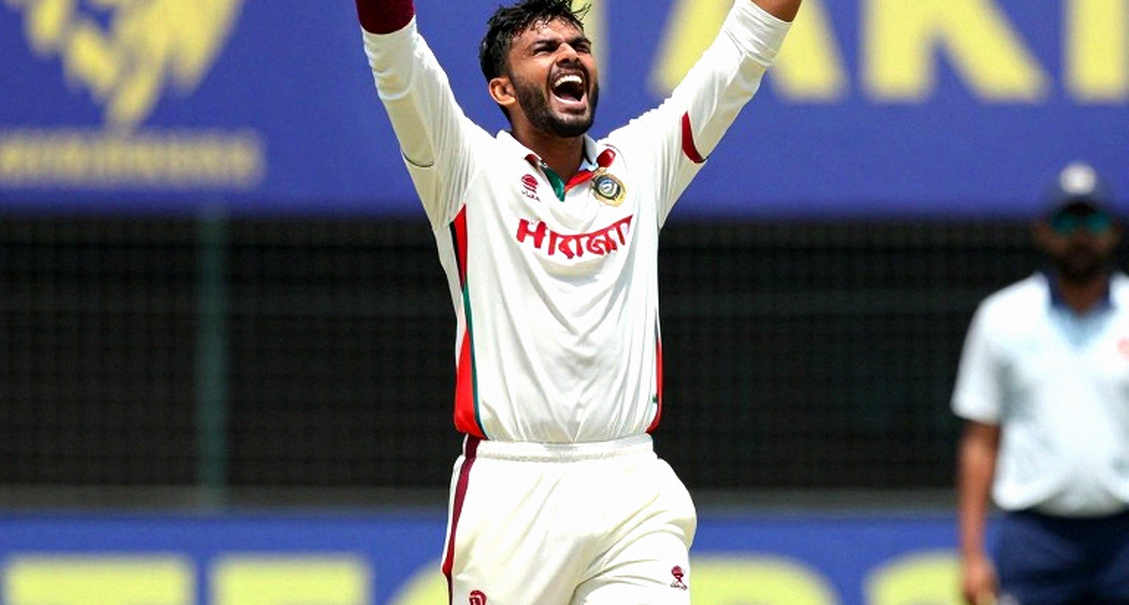
Group B is Bangladesh, Thailand, Netherlands, Zimbabwe and Pakistan. Group A is Sri Lanka, Ireland, Scotland, PNG and the UAE.
On paper Pakistan's group contains exactly one opponent against whom they are not clear favourites — Bangladesh. The other three are associate sides, and Pakistan's sharpest weapon against them is middle-overs spin. European associates play spin like a second language: the first over makes sense, the third does not.
Group A is plainly the stronger half. Sri Lanka and Ireland are full members with established women's programmes; Scotland is the strongest European associate. Pakistan's likely Super Six opposition is therefore a step up in quality from their group. A side that arrives on three comfortable wins suddenly meets batting that knows how to sit on spin.
My projection is simple: Pakistan should reach the Super Six; the final is plausible, not probable. That comes from the shape of the draw and the cross-group fixtures, not from performance data. And it raises a question the release does not answer.
The Super Six carry-over is the biggest unknown
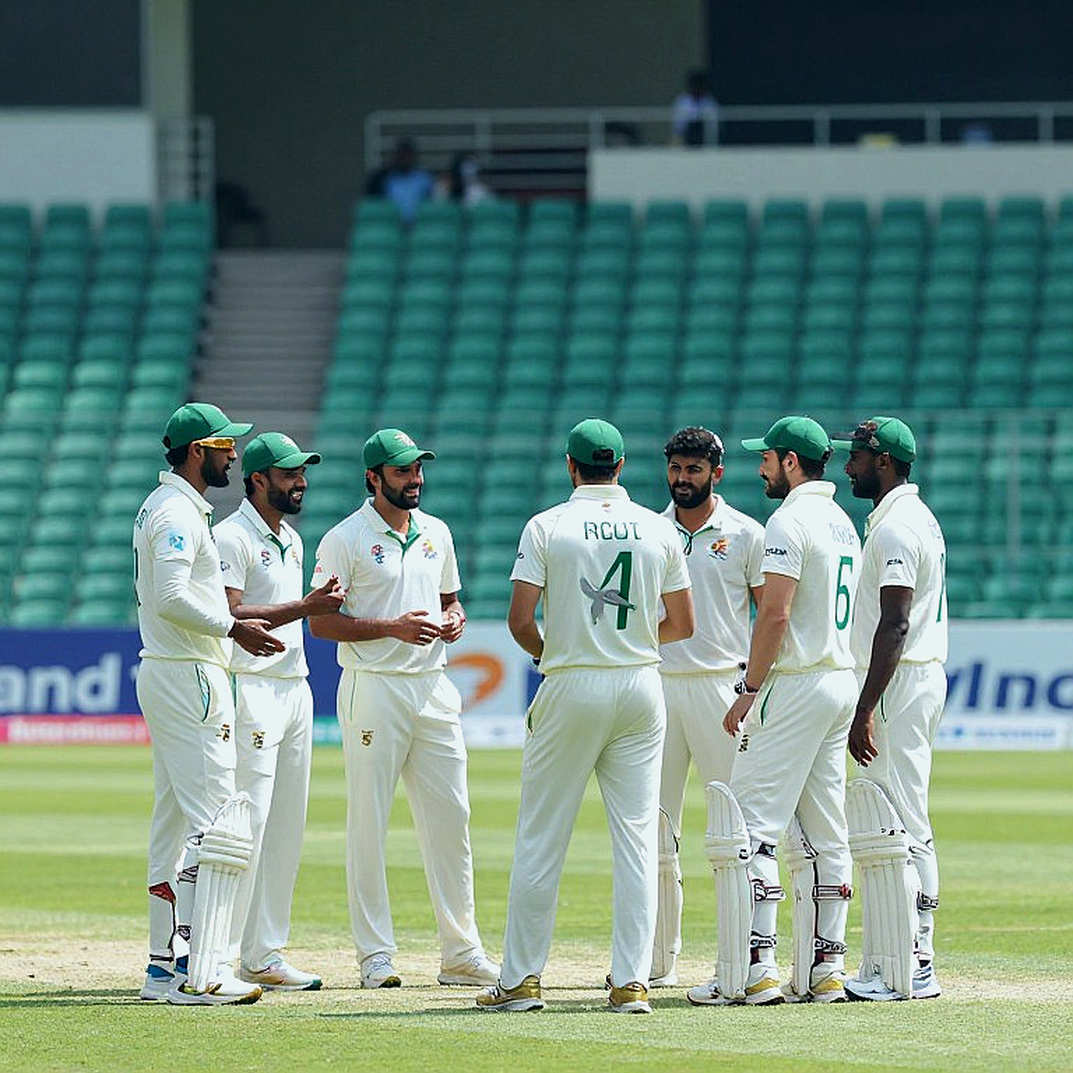
ICC multi-stage qualifiers normally carry forward results against fellow qualifiers. If that applies here, losing to Bangladesh in the group is not one defeat — it is a permanent handicap with no route to repair. If it does not apply, the group stage is a seeding exercise and Pakistan's group anxiety shrinks.
We are not told. In my reading this is the single largest structural uncertainty in the event. Cricket tends to settle these rules quietly before a tournament and let teams discover them afterwards. As a caster I have watched it happen repeatedly: the schedule is published, the regulations are not.
Four spinners, two seamers: not a strategy, a supply chain
The spinners are Nashra Sundhu, Momina Riasat, Tuba Hassan and Umm-e-Hani. The seamers are Tasmia Rubab and Waheeda Akhtar. Four to two — a 2:1 skew.
At first glance this is a deliberate conditions bet on Ajman, and partly it is. In a fifty-over format it means roughly forty overs of spin cover and a genuine fifth-seamer gap. In T20 it is close to optimal for that venue.
But I do not read this as selectorial cleverness. Four spinners and two seamers is less a tactical decision than an honest picture of domestic supply. Pakistan's domestic women's structure — the National Women's T20 Tournament being the freshest evidence — is played on surfaces that reward spin and punish pace. When your entire domestic calendar manufactures spinners, four in an international squad is not a selection triumph; it is the limit of the production line.
The reverse is equally true. Two seamers means that if one has a bad day, the other has to carry an entire forty-over innings or four overs, because there is no third option. There is no left-arm pace option anywhere in the fourteen, and left-arm pace is a scarce, expensive commodity in both formats. Against a side without it, left-handed top-order batters play with their shoulders open.
Two keepers in fourteen: luxury or necessity
A fourteen-player squad carrying two wicketkeepers is a luxury that only makes sense if at least one is picked primarily as a batter. The implication is that Muneeba Ali is being deployed as a captain-keeper who bats in the top three — three jobs at once. That combination is rare internationally and heavy. Captaincy costs most behind the stumps, because every ball demands a decision and every over demands a conversation.
Gull Feroza's inclusion is a clean, healthy signal. She was named best wicketkeeper-batter of the National Women's T20 Tournament, and that award converted directly into an international call-up. Domestic form turning into selection looks simple on paper and is rare in practice.
One honest caveat. That award came against Pakistani domestic bowling. International spin differs in quality, in the consistency of line, and in the alertness of the field. Based on my years of watching matches, the road from a domestic award to an international XI looks shortest at the start and turns out longest.
Fatima Sana's absence costs three things, not two
The regular captain is missing because she is at the Women's Big Bash League. On paper that is two losses: captaincy and the seam-bowling all-rounder slot.
Captaincy has an answer in Muneeba Ali. The seam-bowling all-rounder slot has no answer anywhere in the fourteen. There is a third loss, less visible: the flexibility that a seam-bowling all-rounder provides is what allows selectors to carry a fourth spinner. With Sana available, the four-spinner bet is insured. Without her, the same bet becomes exposed, because the bowling depth is thinner than the team sheet suggests.
This is also the most honest economic fact in the whole story. For second-tier women's teams, the international calendar and the overseas league window now collide directly, and boards have limited leverage over the handful of players who attract a foreign contract. Sana's absence is not a revolt. It is the normal price of the market women's cricket now operates in.
Nashra Sundhu's over allocation is the real tactical document
The release describes Nashra Sundhu as the bowler who will spearhead the attack. That is not a courtesy line; it is a structural statement. In a squad with four spinners and two seamers, the senior left-arm spinner becomes the de facto new-ball-adjacent and middle-overs wicket-taking option.
So the first thing I will watch in the scorecard is when she gets the ball. If she takes the new ball, Pakistan's model is clear: buy cheap overs and squeeze the opposition through the middle. If she is held back for the middle overs, the team is relying on its two quicks in the first six — its thinnest department. That is not an over allocation. It is a manifesto.
Twelve retained: the weight of the word 'Emerging'
Twelve of the fourteen were retained from the previous selection. That number sits awkwardly against the tournament's name.
An event called the Emerging Nations Trophy sets an expectation of experimentation — new faces, new roles, something that feeds the next cycle. Retaining twelve of fourteen says the opposite: this is a continuity assignment, not an experiment.
I am not calling it a mistake. In a system with limited resources, continuity is rational, because the cost of bringing a new player to international standard is one the board cannot easily absorb. But then the name should change. When a squad stays twelve-of-fourteen the same, the word 'Emerging' is doing marketing work for the tournament, not development work for the players. It is the same habit visible across women's cricket everywhere: the event promises development, the team sheet stays familiar.
Nine staff, fourteen players: the government behind the word 'mentor'
The support staff runs to nine people for fourteen players. Wahab Riaz is among them — but his title is mentor, not head coach. Abdur Rehman, Umaid Asif and Imran Farhat appear in technical roles.
In cricket administration a job title is not just a word. A head coach is accountable: contract, appraisal, a report that reaches the board. A mentor has no standard accountability framework. When a senior technical role is renamed, it often signals that the accountability line is deliberately blurred.
The blunter observation is that four former men's internationals arriving together in technical roles should also be read as an employment channel. It does not mean they are unqualified. It means the women's team's technical architecture has become part of the post-career market for men's cricket. Nine staff for fourteen players looks generous until you notice that not one of them appears to be a woman coach.
Eight matches, fourteen days, fourteen players
The maximum load is straightforward: four group games, three Super Six games, one final — eight matches in fourteen days from a fourteen-player squad.
That is a thin rotation buffer for a development event. With two frontline quicks, one seamer's injury collapses the balance. Two keepers exist, but one is the captain and a top-order batter, so she is not a real alternative. Spin depth is good, but spinners also tire — fingers and shoulders accumulate.
A three-day camp, 7 to 9 November, is the weakest link in the whole calculation. Players arrive straight from the National Women's T20 Tournament and have three days to adapt to an international structure. The adaptation load therefore sits on the coaching staff, not the calendar. And the head of that staff is called a mentor.
The Asian Games bronze: a claim with no source
Accompanying material claims a bronze medal at the Asian Games in Japan. No source is given, and the claim does not sit comfortably with the record. Women's cricket has featured at Guangzhou 2026, Incheon 2026 and Hangzhou 2026 (played 2026). None of those was in Japan.
The claim is chronologically coherent only if it refers to the Aichi-Nagoya 2026 Asian Games, scheduled for September–October 2026 — immediately before this November tournament. In that case it is plausible but unverified.
I include this because it says something about the health of the reporting around the event. When a board handout makes an unsourced medal claim and media relays it without a check, the rest of that handout deserves the same caution. Every number in this piece that comes from the board is reliable as a selection fact. Every number that arrives without a source is data pending verification. The reader has to be told that difference, because the press release will not tell them.
Captaincy: not an interregnum, an audition
A board has named a stand-in captain for a single pathway event while simultaneously losing its regular captain to an overseas league. That combination does not read like a caretaker arrangement. It reads like an open leadership question, to be answered by performance.
A strong tournament — clarity in the field, top-order consistency, clean keeping — makes Muneeba Ali's case permanent. A weak one returns the armband, publicly. Ayesha Zafar's appointment as vice-captain is a separate signal: the source says nothing about her on-field role, which suggests the board is building a leadership bench rather than appointing on current output.
Everyone saying Pakistan are favourites is right, and it does not matter
The strongest conventional view is this: Group B is soft, Ajman suits spin, four spinners are in the squad, therefore Pakistan reach the Super Six and contend for the final. I will not call that weak. It is sound, and I have argued it myself above.
But reporting's job is not to predict the winner. It is to point at what nobody is looking at. And what nobody is looking at is this: the fragility here is structural, not cricketing. A tournament with no stated format, no announced broadcast, no official pitch information, an undisclosed carry-over rule and a single handout as its only information pipe is defined less by its results than by its invisibility.
There is a second reversal. When I call a spin-heavy squad well matched to Ajman, I am granting strategic status to something that may not be strategy at all. Four spinners exist because the domestic game produces spinners. Two seamers exist because it does not produce quicks. The three-day camp exists because the calendar has no room. Calling all three a conditions bet is calling necessity intelligence. It is the most common error in cricket analysis: treating what exists as what was chosen.
The real women's cricket story is the broadcast contract, not the feeling
There is a temptation here I want to avoid. Writing about women's cricket, the easy route is to write about a player's effort, a captain's inspiration, a team's hope. That route is not wrong, but it is incomplete and often harmful, because it dodges the question that decides everything: where the money is, and who gets covered.
Over the next few years the real test for women's cricket will not be which team lifts a trophy. It will be how many people are able to watch that trophy being lifted. The next rights cycle, the language of the broadcast, the availability of highlights, the version of the scorecard someone can open at nine in the morning — that is what the next generation of girls will actually see. An event with no broadcast has no public memory. And an event with no public memory does not enter the next cycle's conversation.
Fake noise is easy; belonging is the harder sound to mix. In Ajman there will be no need to mix it, because there will be no microphones.
The question that stays in the comments
The post never ran, but the question stayed in the comments. This time it is: if not one of thirty matches reaches a platform where anyone can watch it, did the tournament happen?
I have no tough answer. I have a caster's habit — I look at the scorecard, then the date beneath it, then wonder who was actually at that ground. Usually the answer is: eleven players, eleven players, two umpires, one scorer, nobody else.
Somewhere between the dawn whistle and the noon mouse-click, I learned both crowds breathe. One sits in the stands. The other refreshes the scorecard page. This event does not appear to have a door for the second one.
What to watch
Three things, all of them outside the scorecard.
First, whether the format is confirmed before the tournament starts. If it is not, the organisers themselves do not consider it necessary, and no performance projection has a foundation.
Second, the Super Six carry-over rule. That small technical line decides how large the Bangladesh match is, and it needs to be read before the first ball, not after.
Third, Nashra Sundhu's first over. If she takes the new ball, Pakistan are starting from their strongest department. If she does not, they are starting from their weakest and hoping spin saves them.
Last frame
Picture an Ajman pitch on the morning of 12 November: someone setting a scoreboard, someone pushing in stumps, two teams walking out to warm up. No camera needed, no commentator needed. If Muneeba Ali walks out for the toss that morning she will be carrying three roles at once — captain, keeper, top-order batter — with a three-day camp, fourteen players and a format that was never announced in a press release.
Every caster is a bard with a headset, trying to make numbers feel like weather. This time the numbers are thin. This time the weather is this: an empty ground, thirty matches, and a question larger than the scorecard — will anyone remember these thirty matches, or will they pass the way an unpublished post passes?