
होमAsian CricketIndia A Squad Announced: 15-Year-Old Sooryavanshi, Tilak's Captaincy and a Five-All-Rounder Spin Bet
India A Squad Announced: 15-Year-Old Sooryavanshi, Tilak's Captaincy and a Five-All-Rounder Spin Bet
बीसीसीआई ने 19-29 नवंबर 2026 को दोहा के वेस्ट एंड पार्क इंटरनेशनल स्टेडियम में होने वाले एसीसी मेन्स राइजिंग स्टार्स एशिया कप के लिए भारत A की 15 सदस्यीय टीम की घोषणा की। कप्तान तिलक वर्मा, उपकप्तान रजत पाटीदार। टीम में 15 वर्षीय वैभव सूर्यवंशी, अभिषेक शर्मा, रिंकू सिंह, दो विकेटकीपर (प्रभसिमरन सिंह, कुमार कुशाग्रह), पांच ऑलराउंडर (सूर्यांश शेडगे, शाहबाज़ अहमद, विप्रज निगम, हर्ष दुबे, तनुष कोटियन) और तीन विशेषज्ञ तेज गेंदबाज (हर्षित राणा, प्रिंस यादव, अर्शद खान) हैं। भारत A ग्रुप B में पाकिस्तान A, नेपाल और यूएई A के साथ है; फिक्स्चर 20 नवंबर (नेपाल), 22 नवंबर (पाकिस्तान A), 24 नवंबर (यूएई A), सेमीफाइनल 26-27 नवंबर, फाइनल 29 नवंबर। मूल घोषणा में प्रारूप (टी20/50 ओवर) स्पष्ट नहीं है, और किसी खिलाड़ी का प्रदर्शन आंकड़ा या चोट-संबंधी जानकारी नहीं दी गई। टीम की बनावट स्पिन-प्रधान है (15 में पांच ऑलराउंडर) और तेज आक्रमण पतला है, जिससे हर्षित राणा की फिटनेस और वर्कलोड महत्वपूर्ण जोखिम बिंदु है। चयन का असली मूल्यांकन 22 नवंबर के पाकिस्तान A मुकाबले और नॉकआउट में होगा।
The BCCI has announced India A's 15-member squad for the ACC Men's Rising Stars Asia Cup 2026. The tournament will be played from 19 to 29 November at the West End Park International Stadium in Doha, Qatar. India A are placed in Group B alongside Pakistan A, Nepal and UAE A. In the group stage, India play Nepal on 20 November, Pakistan A on 22 November and UAE A on 24 November. The semi-finals are scheduled for 26 and 27 November, with the final on 29 November. Group A comprises Bangladesh A, Sri Lanka A, Afghanistan A and Hong Kong. This is not an ICC global event but an ACC (Asian Cricket Council) regional 'A'-level representative tournament—its significance lies in selection process and player development rather than prestige.
The squad reads: Tilak Varma (captain), Rajat Patidar (vice-captain), Abhishek Sharma and Vaibhav Sooryavanshi (top order), Rinku Singh (finisher), Prabhsimran Singh and Kumar Kushagra (wicketkeepers), Suryansh Shedge, Shahbaz Ahmed, Vipraj Nigam, Harsh Dubey and Tanush Kotian (five all-rounders), and Harshit Rana, Prince Yadav and Arshad Khan (three specialist quicks). Five all-rounders in a 15-man squad—33 per cent—is the clearest tactical tell in the entire list.
The first and most important point, which the original announcement never states: the format is unspecified. There is no mention of 50 overs or T20. The squad construction—aggressive openers, Rinku as finisher, five all-rounders and three specialist quicks—points to T20, but that is an inference, not a confirmation. The distinction matters: if this is a 50-over tournament, the reliance on three quicks and the plan to fill overs through five all-rounders would be read very differently. Three matches in five days between 20 and 24 November is manageable in T20; in 50-over cricket it would force rotation of the pace attack. At the ACC 'Emerging/Rising Stars' tier, both formats have historically alternated, so official playing conditions must be confirmed.
On the batting structure, the opening pair is Abhishek Sharma and Vaibhav Sooryavanshi, described as 'explosive options'. This is a deliberately doubly-aggressive pairing, consistent with the modern T20 template in which intent precedes technique. But the most analytically interesting selection in this list is Abhishek Sharma. A senior T20I player appearing in an 'A'-level tournament normally signals one of three things: a workload or fitness reset, a form or role recalibration, or a board-mandated match-volume requirement. The source gives no reason—an information gap worth tracking.
In the middle order, captain Tilak Varma and vice-captain Rajat Patidar are presented as adding 'experience and stability'. The captaincy split is itself a signal: giving Tilak the captaincy and the senior-capped Patidar the deputy role is not merely a squad role but a leadership-succession audition. Both are anchor-capable middle-order batters, and their pairing behind two high-intent openers is a deliberate stabiliser layer—a structurally coherent T20 build.
At five or six is Rinku Singh, about whom the announcement says 'his reputation as a finisher'. The wording deserves attention: the source itself frames this as reputational rather than evidenced by performance data. A finisher's value is almost entirely death-overs strike rate, for which no data is available. Role-wise, Rinku at five or six is the correct fit, but reputation-based selection of a finisher is a classic lagging indicator.
The selection of five all-rounders—Suryansh Shedge, Shahbaz Ahmed, Vipraj Nigam, Harsh Dubey and Tanush Kotian—is the team's biggest strategic bet. It clearly points to a spin-dominant, multi-option bowling plan with deep batting, the standard subcontinental T20 blueprint. Shahbaz Ahmed (left-arm spin all-rounder) and Tanush Kotian (off spin) offer two contrasting spin directions, which matters against teams with subcontinental batting DNA such as Pakistan A and UAE A. Vipraj Nigam (leg spin), if selected, would add a third spin angle—meaning India A could field three spin-bowling all-rounders plus two quicks. That combination may travel poorly outside Asia but suits Doha's conditions. Note: this is a plan optimised for this tournament, not a neutral talent census.
In pace, Harshit Rana, Prince Yadav and Arshad Khan are the only three specialist quicks. For a tournament of at most five matches this is thin but workable, and it clearly signals that the selectors expect the all-rounders to absorb overs. Harshit Rana is the highest-profile name in this group, and his presence in an 'A' squad is a form-and-rhythm management decision—as well as a genuine injury-watch item, because a fast bowler of his type bowling continuously in a compressed five-match window immediately after a T20I series won 3-2 against New Zealand carries real risk. If one of the three specialist quicks breaks down, India A will have to depend on non-specialist overs in a knockout—the squad's clearest fragility.
In wicketkeeping there are two options, Prabhsimran Singh and Kumar Kushagra. Two keepers in 15 is standard cover, but the role split matters: Prabhsimran is conventionally an opener-keeper, Kushagra a middle-order keeper. Choosing between them is effectively a choice about whether the keeper bats in the top two or the middle—and that reshapes the entire batting order.
In terms of tournament architecture the competitive load is modest: at most five matches in 11 days. That means the primary purpose is exposure and evaluation, not physical stress-testing. Group B is structurally two-tiered: Nepal and UAE A are developmental/associate sides, and Pakistan A is the only genuinely competitive peer. India A's group progression is therefore highly probable—which means the tournament's real discriminating value for selectors lies almost entirely in the 22 November fixture against Pakistan A and the two knockouts. Group A—Bangladesh A, Sri Lanka A, Afghanistan A and Hong Kong—is the stronger group on typical 'A'-team depth. If India A top Group B, they are likely to meet a side with more subcontinental spin depth in the semi-final than their group opponents—a genuine tactical step-up. The 20 November match against Nepal is a low-information fixture for selectors: performance against an associate-level attack is a weak signal of readiness for senior international cricket.
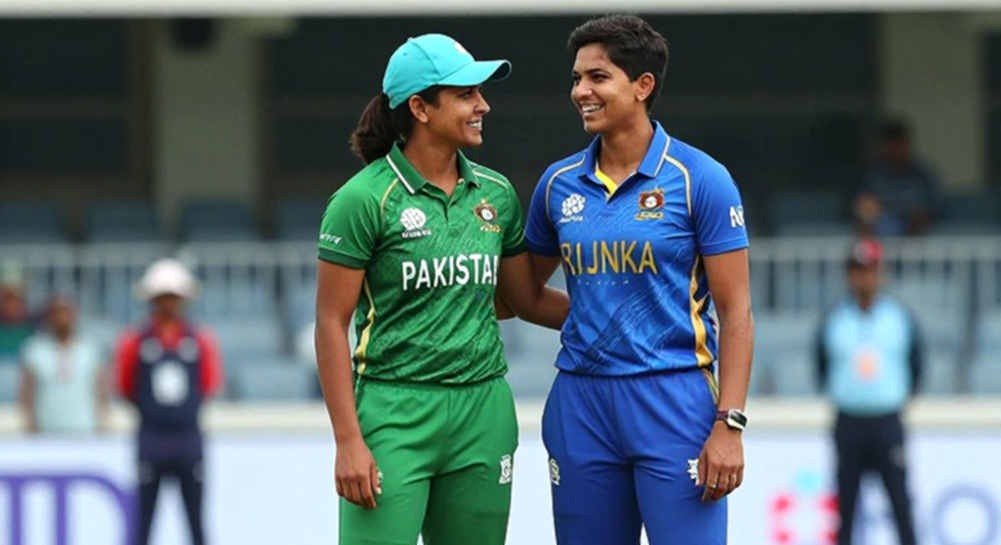
India A versus Pakistan A on 22 November is the tournament's real centrepiece. It is more than a group fixture for two reasons: first, it is the only Group B match likely to be genuinely competitive and therefore the only one that gives selectors real signal; second, the India–Pakistan dimension at any level carries a political and emotional loading, and the fact that it is being played at a neutral venue like Doha is itself the administrative artefact of the absence of bilateral cricket. Stylistically the risk is that India A's spin-heavy attack is well matched to Pakistan A's subcontinental batting technique—but a spin-heavy attack facing a side comfortable against spin loses its main advantage. The differential may end up being India A's superior batting depth rather than its bowling.
Now the part that is not in the announcement and should be disclosed. There is not a single performance metric for any player in this list—no average, no strike rate, no economy, no recent form data, no injury or fitness information. Anyone claiming a player in this squad is 'in form' or 'out of form' has no basis in this announcement. Tilak's captaincy, Patidar's vice-captaincy and Sooryavanshi's selection are all facts of role architecture, not performance assessment. That is the explicit analytical boundary of this report.
Commercially, this is not an event but a talent-market signal. For capped and uncapped young players—Sooryavanshi, Suryansh Shedge, Vipraj Nigam, Harsh Dubey, Prince Yadav, Arshad Khan, Kumar Kushagra—a televised tournament is the cheapest available mechanism to convert 'domestic reputation' into 'auction-relevant visibility'. The premium in play here is a 'pathway-scarcity premium': the market rewards the label of national selection more than the demonstrated output behind it. Sooryavanshi is the archetype—the news value of his selection is driven by his age, not by any published performance data. A necessary distinction: selection for India A is not readiness for senior international cricket, and neither is an IPL auction valuation. These are three separate things.
The biggest human and policy question is the selection of 15-year-old Vaibhav Sooryavanshi. It is a 'pathway acceleration' several years ahead of the standard international debut window—exceptional but risky. In a compressed schedule of five matches in 11 days, management of a 15-year-old would typically be limited to two or three appearances; that is an inference from age and workload norms, not from the source. And this is not a pure development squad—it contains several players who have recently played senior T20Is. That creates a genuine selection tension: will the coaching staff prioritise winning the tournament with capped players, or give the 15-year-old and the uncapped all-rounders meaningful overs and deliveries? The team management's first call will answer that.
Finally, the squad's construction says three clear things. First, the structural logic is internally coherent—two high-intent openers, two anchor-capable middle-order leaders, an established finisher, five all-rounders and three quicks. This is not a random best-available list but a deliberate T20 build. Second, the team's real strength is batting depth, not bowling penetration—it is built to out-score rather than bowl sides out. Third, the age polarisation—from 15 to senior-capped players, with a scarcity of mid-career 24-27 anchors—is not an accident but a selection philosophy: the BCCI is using a single event simultaneously as a match-volume tool for senior fringe players and a maximum-acceleration pathway for an exceptional teenager. It will be judged not by wins and losses but by the decisions taken on 22 November against Pakistan A and in the semi-final.
संबंधित खिलाड़ी
अनुशंसित
Empty Input, Complete Framework: An Audit of the Asian Cricket Data Desk2026-11-02
The Asia Cup Ledger: Who Writes the Calendar, Who Counts the Money2026-11-02
Hong Kong Sixes 2026: 31 Runs and Five Sixes Off Krunal's First Over — India Bowled Out for 88, Pakistan Win by Four Wickets2026-10-30
New Ground Rules for Asian Cricket Analysis: No Verdict Without Format, Data and Source2026-10-28
Jai Moondra's 6/26: Ten Overs, Six Wickets, 26 Runs — and the 2.6 Economy That Matters More Than Ireland's Record Book2026-11-01
A Mirpur Photo Session, 14 New Faces and One Unclosed Document: Auditing Bangladesh's Youth Asia Cup Build-Up2026-11-02
Insufficient Input: Original Text Required for cricket_asia Report2026-11-01
अनुशंसित
Simmons' Counter-Question: Why Chaos Before a Bangladesh Test Stopped Being News2026-10-28
Insufficient Information — Report Cannot Be Generated2026-10-30
Conway Out of First ODI After Eden Park Collision: The Answer Missing From the Report Is the Real Story2026-11-03
The New Geography of Asian Cricket: The Game's Future in the Triangle of Leagues, Formats and Politics2026-11-01
The ODI cap is Indian cricket's scarcest currency — the arithmetic missing from Yuvraj's argument2026-11-01
The Empty Page and the Full Bid: Price, Rumour and the Chair Left Off the Roster in Asian Cricket's Transfer Window2026-11-01
Form Filled, Figures Blank: In Cricket, the Null Result Is Now a Recorded Finding2026-10-29
अनुशंसित
Six Years, Ten Matches, No Format: The Arithmetic Behind the End of India's Unbeaten Run in New Zealand2026-10-31
The Empty Field, the Full Ground: The Politics of N/A in Sports Data2026-11-02
Starc's Six at Newlands: The Truth About 6/72, and the Lie Inside the Five-For Table2026-10-30
The Empty Cone at Mirpur: Ashraful's Exit and Bangladesh's Vacant Batting Post2026-10-26
The fourth evening at St George's Park: Head spoke of a 'unit', the scorecard said nothing2026-10-26
One Sentence That Exposed the Cracks in Pakistan Team Management2026-10-31